Many believe that all water treatment methods are equally effective, but the truth is more complex; water filtration and ionization operate through fundamentally different mechanisms, each offering distinct benefits and limitations. Understanding their technical distinctions is essential for making informed choices—yet, the ongoing debate about their health impacts and cost-efficiency leaves several questions unanswered. Exploring these differences can clarify which system aligns best with our needs and priorities.
Key Takeaways
- Filtration physically removes contaminants, providing immediate and proven water purification, while ionization alters water’s chemical properties without removing impurities.
- Filtration improves taste, clarity, and reduces health risks; ionization mainly increases pH and antioxidant levels with more speculative health benefits.
- Filtration systems typically have moderate, predictable maintenance costs, whereas ionizers involve higher initial costs and complex upkeep.
- Filtration is more affordable and suitable for budget-conscious households; ionization appeals to those seeking potential health benefits and long-term investment.
- Long-term effectiveness depends on durability and maintenance; filtration offers proven contaminant removal, while ionization focuses on chemical and pH modification.
How Do Water Filtration and Ionization Differ in Their Approach?
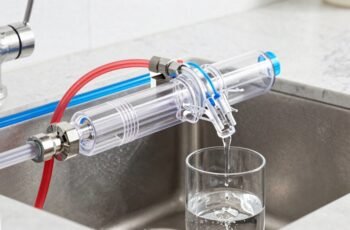
Although both water filtration and ionization aim to improve water quality, they do so through fundamentally different mechanisms. Water filtration employs physical and chemical processes to remove impurities, such as sediments, chlorine, heavy metals, and microorganisms. It typically uses filters, activated carbon, or reverse osmosis membranes to trap or dissolve contaminants. In contrast, ionization involves an electrochemical process that alters the water’s pH and mineral content by passing it through electrically charged plates. This process separates water into alkaline and acidic streams, emphasizing mineral restructuring rather than impurity removal. While filtration focuses on purification through physical barriers or chemical interaction, ionization targets chemical composition modification. Understanding these distinct approaches clarifies their specific roles in water treatment, highlighting the technological divergence between contaminant removal and mineral rebalancing.
What Are the Benefits of Water Filtration Systems?
Water filtration systems offer a range of tangible benefits by effectively removing contaminants that can compromise water quality. They utilize advanced technologies such as activated carbon, reverse osmosis, and sediment filtration to eliminate impurities like bacteria, chemicals, heavy metals, and particulates. This process markedly reduces health risks associated with contaminated water, including gastrointestinal illnesses and long-term toxic exposure. Beyond health improvements, filtration enhances water taste, odor, and clarity, leading to increased consumer satisfaction and better appliance performance. These systems also provide economic benefits by decreasing reliance on bottled water and reducing maintenance costs for plumbing fixtures. Furthermore, filtration systems can be tailored for specific needs, offering targeted removal of harmful substances and ensuring consistent water quality for both residential and commercial applications.
How Does Water Ionization Improve Water Quality?
How exactly does water ionization enhance water quality? Water ionization alters its chemical composition by splitting molecules into ions, primarily producing alkaline and acidic streams. This process increases the water’s pH, making it less acidic and more alkaline. Elevated pH levels can neutralize acidic contaminants and reduce oxidative stress, potentially improving hydration at a cellular level. Additionally, ionization increases the concentration of negatively charged ions (OH-) and antioxidants, which may combat free radicals. The resulting alkaline water also exhibits smaller cluster sizes, potentially enhancing absorption. However, while ionization modifies pH and antioxidant properties, it does not directly eliminate physical or chemical contaminants. Instead, it primarily influences water’s chemical attributes, which may contribute to perceived improvements in overall water quality.
Which Method Is Better for Removing Contaminants?
When evaluating methods for removing contaminants from water, it’s essential to take into account their mechanisms of action and effectiveness. Water filtration primarily relies on physical barriers—such as activated carbon, reverse osmosis membranes, or ion exchange resins—to physically trap or chemically alter impurities. These processes effectively remove a broad spectrum of contaminants, including bacteria, heavy metals, chlorine, and sediments, providing an extensive purification. Conversely, ionization focuses on altering water’s pH and mineral content through electrochemical processes, which do not directly eliminate contaminants. As a result, filtration methods generally prove more effective for immediate and thorough contaminant removal, especially heavy metals and pathogens. Ionization, while beneficial for pH adjustment, cannot substitute for thorough physical filtration when it comes to contaminant elimination.
How Do Water Filtration and Ionization Impact Health?
Given that filtration methods effectively eliminate harmful contaminants, their impact on health primarily centers around reducing exposure to dangerous substances like bacteria, heavy metals, and chlorine. This reduction minimizes risks of gastrointestinal illnesses, heavy metal toxicity, and oxidative stress, thereby supporting overall health. Water ionization, on the other hand, is believed to alter water’s pH and antioxidant capacity, potentially influencing cellular health and hydration efficiency. While filtration directly decreases ingestion of toxic substances, ionization’s health benefits are more speculative and less supported by extensive scientific evidence. Both systems aim to improve water quality, but filtration offers immediate, proven health advantages by removing harmful particles. Ionization’s impact remains under investigation, with some suggesting it may offer additional benefits related to water’s alkalinity and antioxidant properties.
What Are the Costs and Maintenance Needs of Each System?
While both water filtration and ionization systems require an initial investment, their ongoing costs and maintenance needs differ considerably. Water filtration systems typically involve cartridge replacements, which incur periodic costs depending on water quality and usage volume. These filters require regular inspection and timely replacement to maintain efficiency, with some systems needing quarterly or biannual servicing. In contrast, ionization units generally have higher upfront costs but lower ongoing expenses, primarily limited to occasional electrode cleaning and system calibration. Maintenance for ionizers is less frequent but more technical, requiring specific cleaning agents and monitoring of pH levels. Overall, filtration systems tend to have predictable, moderate ongoing costs, while ionization systems involve higher initial investment with comparatively lower, but more specialized, maintenance requirements.
Which Water Treatment Method Suits Your Lifestyle Best?
When selecting a water treatment method, we must consider ongoing maintenance, associated costs, and how they align with our budget. Each system varies in complexity and expense, impacting long-term sustainability and convenience. Analyzing these factors helps determine which option best fits individual lifestyle requirements.
Maintenance and Upkeep
How much time and effort are we willing to dedicate to maintaining our water treatment systems? Water filtration systems generally require regular filter replacements, which can range from monthly to quarterly, depending on usage and water quality. Maintenance involves monitoring filter lifespan, cleaning components, and ensuring proper flow rates. Ionizers, on the other hand, demand more intricate upkeep, including descaling, electrode cleaning, and periodic system calibration to maintain ideal ionization levels. While filtration systems tend to be simpler and less time-consuming, ionizers require a more consistent, hands-on approach to sustain performance. Both systems demand attention to prevent microbial buildup or system malfunctions; however, the complexity and frequency of maintenance are key factors in determining which method aligns best with our lifestyle.
Cost and Budgeting
Cost considerations play an essential role in determining which water treatment system aligns with our financial and lifestyle priorities. Filtration systems typically involve lower upfront costs but may require periodic filter replacements, increasing long-term expenses. Ionizers often entail higher initial investment due to advanced technology and maintenance needs but can offer ongoing savings through reduced filter replacements. When evaluating options, consider:
- Initial purchase price
- Replacement or consumable costs
- Energy consumption
- Maintenance frequency
- Longevity and durability
A thorough cost analysis reveals that filtration may suit budget-conscious households seeking straightforward solutions, whereas ionization could be advantageous for those prioritizing long-term health benefits with higher upfront investments. Ultimately, matching costs to lifestyle and financial capacity guarantees informed, sustainable choices.
Frequently Asked Questions
Can Water Ionization Eliminate Heavy Metals Effectively?
Water ionization alone isn’t effective at removing heavy metals; it primarily alters pH levels and produces antioxidant-rich water. For heavy metal elimination, we recommend complementary filtration systems like activated carbon or reverse osmosis for thorough purification.
Are There Any Health Risks Associated With Water Ionizers?
We acknowledge that water ionizers are generally safe, but studies indicate potential risks like lead leaching in some models. We recommend thorough research and regular maintenance to mitigate health concerns associated with ionizer use.
How Long Do Water Filtration Systems Typically Last?
Water filtration systems typically last between 6 months to 2 years, depending on usage, filter type, and water quality. Regular maintenance and timely filter replacements are crucial to guarantee peak performance and water safety.
Does Ionization Change the Taste of Water?
Ionization often alters water’s taste by increasing pH levels and introducing minerals, which can create a smoother, less metallic flavor. We find that this process can enhance water palatability, though experiences vary based on initial water quality.
Which System Is More Environmentally Friendly?
Ionization systems are generally more environmentally friendly because they use minimal energy and produce fewer waste byproducts compared to traditional filtration methods, which often involve disposable filters and chemical treatments, making them a more sustainable choice overall.
Conclusion
In conclusion, choosing between filtration and ionization depends on your priorities. Filtration effectively removes contaminants, with over 80% of waterborne illnesses linked to contaminated water, highlighting its importance. Ionization offers potential health benefits but lacks conclusive scientific backing. Analyzing costs, maintenance, and health impacts, we find filtration more accessible for most. Ultimately, understanding your specific needs guarantees you select the most practical and scientifically supported water treatment option for your household.