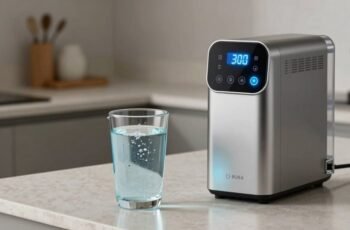
We recognize that clean, mineral-rich water is vital for health, and reverse osmosis (RO) offers highly effective filtration. However, while RO removes many contaminants, it often results in water with a neutral or slightly acidic pH due to mineral depletion. Combining RO with alkaline re-mineralization processes can address this, but it raises questions about effectiveness, maintenance, and overall health benefits. Exploring how these systems work together becomes essential for anyone committed to ideal hydration.
Key Takeaways
- Reverse osmosis produces water that is often slightly acidic due to mineral removal and dissolved gases like CO₂.
- Post-treatment alkaline filters reintroduce minerals, raising pH for healthier, alkaline drinking water.
- Proper placement of alkaline filters after the membrane ensures effective pH adjustment.
- Regular maintenance and water testing are essential to maintain optimal alkalinity and system performance.
- Combining RO with alkaline filtration enhances water taste, mineral content, and health benefits.
What Is Reverse Osmosis and How Does It Work?
Reverse osmosis is a water purification process that employs a semi-permeable membrane to remove contaminants from water. This membrane allows water molecules to pass through while blocking dissolved solids, bacteria, viruses, and other impurities. The process involves applying pressure to the feed water, forcing it through the membrane. As water flows through, contaminants are retained on the upstream side and flushed away as waste. The result is purified water with markedly reduced levels of dissolved salts, organic compounds, and particulates. Reverse osmosis systems typically include pre-filters to remove larger particles, enhancing membrane longevity and efficiency. This method provides high-quality, mineral-reduced water suitable for various applications, including drinking and industrial processes. Its precision and effectiveness make it a cornerstone of modern water treatment systems.
Why Reverse Osmosis Often Produces Slightly Acidic Water
Have you ever wondered why water purified by reverse osmosis often exhibits a slightly acidic pH? This phenomenon results primarily from the removal of mineral ions like calcium and magnesium during the filtration process. These minerals act as natural buffers, neutralizing acidity and maintaining a stable pH. When they are eliminated, the resulting water lacks buffering capacity, making it more susceptible to pH fluctuations. Additionally, residual gases, such as carbon dioxide, can dissolve into the purified water, forming carbonic acid, which further lowers the pH. The combination of mineral depletion and gas absorption explains why RO water tends to be slightly acidic. Understanding this helps us recognize that the process’s design inherently influences pH levels, often necessitating post-treatment adjustments for specific applications.
The Benefits of Alkaline Water for Your Health
Alkaline water offers several health benefits that many consumers find valuable, especially given the common concerns about acidity and pH balance in our bodies. Maintaining ideal pH levels can support metabolic functions and reduce acid reflux. Alkaline water’s mineral content, primarily calcium, magnesium, and potassium, contributes to bone health and electrolyte balance. Additionally, its antioxidant properties may help neutralize free radicals, potentially reducing oxidative stress. The following table summarizes key benefits:
| Benefit | Explanation |
|---|---|
| pH Balance | Supports body’s natural pH regulation, reducing acidity |
| Mineral Intake | Provides essential minerals for overall health |
| Antioxidant Effect | May decrease oxidative damage, promoting longevity |
Incorporating alkaline water can enhance hydration efficiency and overall wellness.
How Post-Treatment Alkalization Filters Raise pH Levels
Post-treatment alkalization filters increase pH levels primarily through the use of specific mineral media that release alkaline ions into the water. The choice of filter material directly impacts the effectiveness of pH adjustment, with some media providing more consistent results than others. Understanding these material properties allows for precise control of water alkalinity in reverse osmosis systems.
Enhancing pH Balance
How do alkalization filters effectively raise the pH level of purified water? They achieve this by adding alkaline minerals, such as calcium, magnesium, and bicarbonates, which neutralize acidity and increase pH. The process involves ion exchange or mineral addition, resulting in water with a balanced alkaline profile.
| Mineral Type | Effect on pH |
|---|---|
| Calcium | Raises pH |
| Magnesium | Stabilizes pH |
| Bicarbonates | Buffer acids |
Filter Material Impact
The materials used in alkalization filters directly influence their ability to raise water pH levels by facilitating mineral addition and ion exchange processes. These materials determine both the efficiency and stability of pH adjustment.
- Calcite: Provides calcium carbonate, buffering acidity and increasing pH through mineral dissolution.
- Corosex: A magnesium-based compound that rapidly raises pH due to higher reactivity.
- Magnesium oxide: Offers a stable source of magnesium, contributing to mineral content and alkalinity.
- Mixed media: Combines calcite and Corosex to optimize pH elevation and mineral content.
Selecting appropriate materials guarantees effective post-treatment alkalization, balancing mineral content with desired pH levels and maintaining water quality standards.
Combining Reverse Osmosis With Alkaline Filtration: Is It Worth It?
Combining reverse osmosis (RO) with alkaline filtration can enhance water quality by addressing the limitations of each method individually. RO effectively removes contaminants, dissolved solids, and impurities, but it also strips beneficial minerals, resulting in neutral or slightly acidic water. Alkaline filtration, on the other hand, adds essential minerals and raises pH levels, providing healthier, more balanced water. When integrated, these systems create a thorough solution that guarantees purity without sacrificing mineral content. This combination improves taste, alkalinity, and overall water quality. However, it increases system complexity and maintenance requirements. While the benefits are significant—particularly for those seeking mineral-rich, alkaline water—the added cost and technical considerations may not justify the setup for every user. Careful assessment of needs and system design is essential.
Choosing the Right Alkalizing Filter for Your RO System
Selecting the appropriate alkalizing filter requires careful consideration of material options to guarantee chemical compatibility and filtration efficiency. We must verify that the chosen filter material integrates seamlessly with existing RO components without compromising system performance. Accurate matching of filter specifications is essential for maintaining water quality and longevity of the filtration system.
Filter Material Options
Choosing the appropriate alkalizing filter material for your RO system requires careful consideration of its chemical composition, pore size, and ability to effectively raise pH levels. Several materials are used to optimize water alkalinity:
- Calcite (Calcium Carbonate): Raises pH through mineral dissolution, providing calcium ions.
- Coral Sand: Similar to calcite but with added trace elements, enhancing mineral content.
- Magnesium Oxide: Increases alkalinity with a focus on magnesium ions, crucial for water buffering.
- Alkaline Balls/Resin: Composites that neutralize acidity and elevate pH via ion exchange processes.
Selection depends on water chemistry and desired pH adjustment, ensuring compatibility with the RO system’s design and intended alkalinity level.
Compatibility With RO Systems
Ensuring that an alkalizing filter material is compatible with your reverse osmosis (RO) system is vital for effective performance and longevity. Compatibility depends on the filter’s chemical composition and the system’s design, particularly the post-treatment stage. Some alkalizing filters contain mineral blends that may clog or damage certain RO membranes if not formulated correctly. It’s essential to verify that the filter’s specifications specify compatibility with your specific RO unit, including pressure ratings and flow rates. Additionally, the filter should be designed to integrate seamlessly without causing pressure drops or flow restrictions. Using incompatible materials risks membrane fouling or reduced system efficiency. As a result, consulting manufacturer guidelines and selecting filters explicitly engineered for your RO system guarantees maximum performance and durability.
Installing and Maintaining Your Reverse Osmosis With Alkaline Filter
While installing and maintaining your reverse osmosis system with an alkaline filter requires careful attention, following the correct procedures guarantees ideal performance and longevity. Proper installation involves precise placement of the alkaline filter post-membrane to ensure ideal pH adjustment. Regular maintenance includes:
- Replacing filters according to manufacturer’s schedule, typically every 6-12 months.
- Inspecting for leaks at connection points and tightening fittings as needed.
- Sanitizing the system periodically with approved disinfectants to prevent bacterial growth.
- Monitoring water quality using TDS meters to guarantee filtration efficiency remains perfect.
Adhering to these steps maintains system integrity, prevents contamination, and sustains the alkalinity level essential for healthy water. Proper upkeep ensures consistent water quality and system longevity.
Common Challenges and How to Troubleshoot Them
Despite careful installation and maintenance, reverse osmosis systems with alkaline filters can still encounter common challenges that affect performance and water quality. A frequent issue is reduced water flow rate, often caused by membrane fouling or clogging from mineral buildup. Regularly inspecting and flushing filters, along with pre-treatment of feed water, can mitigate this. Another challenge is a decline in pH levels, which may indicate membrane degradation or insufficient alkalinity addition. To troubleshoot, we recommend testing feed water parameters and replacing the membrane if necessary. Additionally, taste and odor issues can result from bacterial growth or biofouling; cleaning the system with appropriate sanitizers typically resolves this. Consistent monitoring of system components and water parameters guarantees ideal operation and water quality.
Comparing Reverse Osmosis Alkaline Systems to Other Water Purification Methods
Reverse osmosis (RO) alkaline systems stand out among water purification methods due to their ability to effectively remove a broad spectrum of contaminants while simultaneously enhancing water’s pH and mineral content. Compared to other methods, such as activated carbon filtration, UV sterilization, ion exchange, or distillation, RO alkaline systems offer distinct advantages:
- Comprehensive Contaminant Removal: They eliminate dissolved solids, heavy metals, and microorganisms more effectively.
- pH Adjustment: Unlike standard RO, alkaline systems reintroduce minerals to elevate pH levels.
- Mineral Content: They restore essential minerals lost during filtration, supporting water’s alkalinity.
- Efficiency and Convenience: They combine multiple purification steps into a single system, reducing the need for separate devices.
This integration provides a balanced, high-quality water output superior in purity and mineralization.
FAQs About Reverse Osmosis and Alkaline Water Benefits
Understanding the benefits of reverse osmosis (RO) alkaline water often prompts important questions about its safety, effectiveness, and health impacts. RO systems effectively remove contaminants, including heavy metals, pesticides, and microorganisms, while preserving essential minerals through subsequent alkaline remineralization. Concerns about mineral loss are valid; however, modern systems reintroduce beneficial minerals to optimize pH balance and taste. Scientific evidence supports that alkaline water from RO systems can enhance hydration and buffer acidity, potentially benefiting individuals with acid reflux or digestive issues. It’s vital to guarantee that RO units include proper filtration stages and mineral reintroduction. Overall, when properly maintained, RO alkaline water is a safe, reliable source of purified, mineralized water that aligns with health and hydration goals.
Frequently Asked Questions
Can Reverse Osmosis Remove Beneficial Minerals From Alkaline Water?
Reverse osmosis removes most minerals, including beneficial ones, from water. We recognize this process can strip essential nutrients, so many choose re-mineralization filters afterward to restore mineral levels and maintain health benefits.
How Long Does a Typical Reverse Osmosis Alkaline Filtration System Last?
Typically, reverse osmosis alkaline systems last 2 to 3 years, but this varies based on usage, water quality, and maintenance. Regular filter replacements and system checks guarantee peak performance and prolonged lifespan.
Is Alkaline Water From RO Systems Safe for Daily Consumption?
Yes, alkaline water from RO systems is generally safe for daily consumption when properly filtered and maintained, as it reduces contaminants and balances pH levels; however, consulting health professionals is advisable for personalized dietary needs.
Does Mineral Content Affect the Effectiveness of Alkaline Filters?
Mineral content greatly influences alkaline filter effectiveness, as it buffers pH levels and enhances alkalinity. Variations in mineral levels can alter performance, so maintaining ideal mineral concentrations guarantees consistent, targeted alkaline water quality and efficacy.
Are There Specific Maintenance Tips for Alkaline-Enhanced RO Systems?
Think of your alkaline-enhanced RO system as a finely tuned engine; regularly replace filters, sanitize components, monitor pH levels, and check mineral levels to guarantee ideal performance and water quality, just like maintaining precision machinery.
Conclusion
Together, by integrating reverse osmosis with alkaline filtration, we create a vessel of purity and balance—like a finely tuned symphony where each note harmonizes. This system symbolically acts as a conduit, transforming raw, contaminated water into a clear stream of health-enhancing minerals and ideal pH. It’s a precise, reliable solution that embodies clarity and vitality, ensuring every sip supports our well-being with the consistency of a well-engineered machine—trustworthy, indispensable, and fundamentally transformative.