Studies show that neglecting proper maintenance can reduce a water ionizer’s lifespan by up to 50%. Regular cleaning, descaling, and timely replacement of filters and electrodes are essential to prevent mineral buildup and corrosion, which compromise performance. Ensuring ideal water quality and adhering to manufacturer guidelines are vital steps. Understanding these maintenance fundamentals helps maximize your device’s efficiency, but knowing exactly how and when to perform each task is key to long-term reliability.
Key Takeaways
- Regularly perform descaling and cleaning to prevent mineral buildup and electrode corrosion.
- Replace filters every 6 to 12 months and electrodes every 1 to 2 years for optimal performance.
- Use filtered or purified water to minimize mineral deposits and internal clogging.
- Follow a scheduled maintenance routine, including membrane inspection and external cleaning.
- Keep detailed records of maintenance activities and consult professionals for periodic inspections.
How to Clean and Descale Your Water Ionizer for Longevity
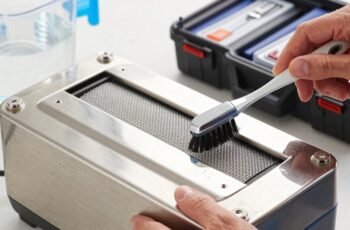
To guarantee your water ionizer maintains best performance and extends its lifespan, regular cleaning and descaling are essential. Begin by disconnecting the unit from power and draining residual water. Use a manufacturer-recommended descaling solution, typically a dilute acid-based cleaner, and circulate it through the system for the prescribed duration. This process dissolves mineral deposits, primarily calcium and magnesium buildup, that impair electrode efficiency. After descaling, thoroughly rinse the system with clean water to remove any residual solution. Conduct periodic inspections of internal components for signs of corrosion or scaling. Maintaining a strict cleaning schedule prevents mineral accumulation, ensuring ideal electrolysis conditions, consistent pH levels, and prolonging component integrity. Proper descaling safeguards your investment and maintains water quality standards.
Replacing Filters and Electrodes at the Right Intervals
Regularly replacing filters and electrodes at recommended intervals is essential for maintaining ideal water quality and device performance. Filters should be replaced according to manufacturer specifications, typically every 6 to 12 months, to prevent clogging and bacterial growth. Electrodes require periodic replacement—often every 1 to 2 years—to sustain best ionization efficiency, as mineral deposits and electrode degradation reduce effectiveness over time. Precise timing depends on water hardness, usage frequency, and contaminant levels. Using the correct replacement parts ensures the ionizer maintains proper pH levels and maximum filtration. Failure to adhere to these intervals can lead to diminished water quality, increased strain on the unit, and potential damage. Regular maintenance guarantees consistent performance, prolongs device lifespan, and upholds health standards.
Tips for Proper Water Quality and Usage Habits
Maintaining high water quality and proper usage habits is essential to guarantee the longevity and efficiency of your water ionizer. Use filtered or purified water to reduce mineral buildup and prevent clogging of internal components. Avoid water with high levels of chlorine or chloramine, as these can corrode electrodes over time; consider pre-treating tap water with activated carbon filters. Regularly monitor water pH and mineral content, ensuring they stay within manufacturer-recommended ranges. Operate the device according to the specified cycle durations, avoiding prolonged or excessive use that can strain internal parts. Keep the unit clean by wiping surfaces and inspecting for residue or mineral deposits. Consistent adherence to these practices preserves ideal electrolysis performance and minimizes wear, extending the device’s operational lifespan.
Troubleshooting Common Maintenance Issues
When common maintenance issues arise with your water ionizer, prompt and accurate troubleshooting is essential to prevent further damage and guarantee peak performance. First, verify the power connection and circuit integrity, ensuring the unit is receiving adequate voltage. If water flow is inconsistent or weak, inspect the inlet filters for clogging and clean or replace as necessary. For abnormal taste or odor, examine and clean the electrolysis chamber and replace any filters or carbon media. If error codes appear, consult the manufacturer’s manual for specific diagnostics. Regularly check for mineral buildup on electrodes; if present, perform a descaling process using approved solutions. Address issues systematically, documenting each step, to isolate faults efficiently and restore ideal operation without risking damage to internal components.
Creating a Regular Maintenance Schedule to Protect Your Investment
Establishing a structured maintenance schedule is essential to safeguard your water ionizer’s performance and extend its lifespan. We recommend creating a routine that includes regular filter replacements, electrode cleaning, and membrane inspections. Record maintenance dates and procedures to guarantee consistency and facilitate troubleshooting. Adherence to manufacturer guidelines for cleaning intervals prevents mineral buildup and corrosion, which can impair ionization efficiency. Implementing a checklist for each maintenance task minimizes oversight and ensures thorough upkeep. Additionally, scheduling periodic professional inspections can identify potential issues before they escalate. By maintaining a disciplined routine, you reduce the risk of costly repairs, optimize water quality, and prolong your device’s operational life. A proactive approach to maintenance ultimately protects your investment and guarantees sustained performance.
Frequently Asked Questions
How Long Do Water Ionizer Electrodes Typically Last?
Electrodes in water ionizers generally last between 3 to 5 years with proper maintenance. Regular cleaning and using quality water extend their lifespan, ensuring consistent performance and ideal ionization levels for your water.
Can Mineral Buildup Damage the Water Ionizer?
Mineral buildup can indeed damage your water ionizer by causing corrosion, reducing efficiency, and impairing electrode performance. Regular cleaning and descaling are essential to prevent such damage and guarantee peak functioning and lifespan of your device.
What Are Signs of Declining Water Quality?
Signs of declining water quality include unusual taste or odor, increased mineral deposits, cloudy appearance, and reduced ionization efficiency. We recommend regular testing and maintenance to guarantee peak performance and water purity, preventing potential damage from mineral buildup.
Does Water Source Affect Ionizer Lifespan?
Absolutely, the water source dramatically influences our ionizer’s lifespan; impurities, minerals, and pH levels can accelerate wear and tear, causing the device to deteriorate faster. Regular testing and filtration considerably extend its operational life, ensuring peak performance.
Are There Advanced Maintenance Techniques for Extended Durability?
Yes, we recommend advanced techniques like regular electrode cleaning with specific descaling agents and monitoring pH and ORP levels. These practices guarantee peak performance and greatly extend the durability of your water ionizer through precise, proactive maintenance.
Conclusion
By adhering to a disciplined maintenance routine, we guarantee our water ionizers continue to operate at peak efficiency, safeguarding their internal components from premature wear. Consistent cleaning, timely replacements, and mindful water choices act as the subtle currents guiding our device’s longevity. With careful observation and scheduled upkeep, we nurture a reliable system that serves us well over time, maintaining ideal performance while gracefully extending its operational lifespan—an investment that rewards us with clean, healthful water daily.