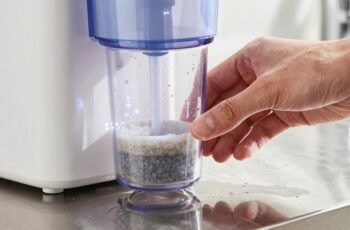
Studies show that neglecting proper filter maintenance can reduce a water ionizer’s efficiency by up to 30%, compromising water quality and system longevity. As professionals, we recognize that regular upkeep isn’t just about extending device lifespan; it’s about ensuring safety and consistent performance. Yet, many users overlook critical steps, risking mineral buildup and bacterial growth. To avoid these pitfalls, it’s essential to follow structured maintenance protocols—details that can greatly influence your system’s overall reliability.
Key Takeaways
- Replace filters every 6–12 months or sooner if water flow decreases or taste changes.
- Regularly clean filter housings with manufacturer-approved descaling or activated carbon solutions.
- Inspect for mineral buildup, blockages, or leaks, and flush system thoroughly after filter replacement.
- Avoid over-tightening filter housings and use compatible cleaning agents to prevent damage.
- Monitor water quality parameters like pH and TDS regularly to ensure optimal system performance.
Why Regular Maintenance Matters for Water Ionizer Filters
Regular maintenance of water ionizer filters is crucial to guarantee peak performance and water quality. Consistent upkeep ensures the removal of accumulated minerals, contaminants, and potential biofilms that can impair filtration efficiency. Over time, mineral deposits such as calcium and magnesium build up on filter media, reducing flow rate and ion exchange capacity. This deterioration compromises the system’s ability to produce consistently alkaline, high-quality water. Additionally, neglecting maintenance can lead to bacterial growth within the filter, posing health risks. By adhering to a regular maintenance schedule, we prevent clogging, extend filter lifespan, and sustain ideal water ionization. Precise cleaning and timely replacement are necessary to maintain system integrity, ensuring the delivery of safe, clean, and properly ionized water for continuous health benefits.
Signs That Your Water Ionizer Filter Needs Cleaning or Replacing
We observe that changes in water taste or a noticeable decrease in flow rate often indicate filter degradation. These symptoms suggest accumulated impurities or clogging that compromise filtration efficiency. Recognizing these signs promptly allows for timely maintenance, ensuring peak ionizer performance.
Unusual Water Tastes
Unusual water tastes often indicate that your water ionizer filter may be compromised or nearing the end of its effective lifespan. These taste anomalies typically result from accumulated contaminants or degradation of filter media, which diminish the filtration process. A metallic, bitter, or sulfuric flavor suggests the presence of residual metals or sulfur compounds that the filter is no longer effectively removing. Such changes in taste are measurable indicators of reduced filtration efficiency and can signal biofilm buildup or media exhaustion. Regular analysis of water taste, combined with routine maintenance, helps identify when filter replacement is necessary. Ignoring these taste alterations can compromise water quality, potentially allowing harmful substances to bypass filtration, underscoring the importance of timely filter assessment and replacement.
Decreased Water Flow
Have you noticed a slowdown in the flow of water from your ionizer? This often indicates that the filter’s internal components are clogged or degraded. To assess the issue:
- Reduced flow rate compared to normal operation suggests filter obstruction.
- Increased pressure buildup may occur if the flow is restricted, stressing the system.
- Inconsistent water volume indicates partial blockage or filter fatigue.
- Longer filtration times point to decreased permeability within the filter media.
Monitoring these signs helps determine whether cleaning or replacing the filter is necessary. Over time, mineral deposits and debris accumulate, impeding water flow. Regular inspection and maintenance guarantee ideal performance and prevent potential system damage.
How Often Should You Change Your Water Ionizer Filter?
Determining the ideal interval for filter replacement requires understanding the manufacturer’s recommended schedule and how usage patterns influence filter longevity. We must also recognize signs of filter degradation, such as reduced water quality, which indicate the need for earlier replacement. Delaying changes can compromise system performance and water purity, underscoring the importance of timely maintenance.
Recommended Filter Replacement Interval
Regularly replacing your water ionizer filter is crucial to maintain peak filtration performance and guarantee water quality. The recommended replacement interval depends on several factors, including water usage and quality. Typically, the following guidelines apply:
- Replace every 6 to 12 months for standard household use.
- Change every 3 to 6 months if water contains high levels of impurities or minerals.
- Replace more frequently if the unit processes large volumes daily.
- Consult manufacturer specifications for precise timelines based on filter type and model.
Adhering to these intervals ensures maximum filtration efficiency and prevents clogging or degradation. Regular maintenance based on these intervals minimizes the risk of compromised water quality and extends the lifespan of the filtration system.
Signs of Filter Degradation
As filters degrade over time, their ability to effectively remove impurities diminishes, leading to noticeable declines in water quality. Signs of this degradation include a decrease in water flow rate, indicating clogging or reduced filtration efficiency. You may also observe a change in water taste or odor, reflecting compromised purification. Increased mineral buildup on the filter surface can signal that filtration capacity is waning. Additionally, if the filter’s lifespan exceeds the manufacturer’s recommended interval without replacement, performance issues are likely to intensify. Monitoring these indicators allows us to identify when the filter’s effectiveness is compromised, guaranteeing we maintain ideal water quality. Recognizing these signs early helps prevent further system strain and ensures continuous access to safe, clean drinking water.
Impact of Delayed Changes
When water ionizer filters are not replaced at appropriate intervals, their capacity to remove contaminants diminishes considerably, which can compromise water quality and system efficiency. Delayed changes lead to several issues:
- Reduced filtration capacity, allowing harmful substances to bypass the filter.
- Increased bacterial growth, posing health risks and potential biofilm formation.
- Decreased ionizer performance, affecting pH balance and mineral content.
- Higher maintenance costs, as system components endure greater strain and require repairs.
The cumulative effect results in compromised water purity and system longevity. Regular filter replacement guarantees ideal contaminant removal, maintains ionizer function, and prevents costly repairs. Adhering to recommended change intervals is essential for consistent water quality and system performance.
Step-by-Step Guide to Cleaning Your Water Ionizer Filter
Cleaning your water ionizer filter is a critical maintenance step that guarantees peak performance and water quality. We recommend beginning by turning off the device and disconnecting it from the power source. Next, carefully remove the filter assembly according to the manufacturer’s instructions, ensuring minimal disruption to connected components. Prepare a cleaning solution using a mixture of activated carbon or a manufacturer-approved descaling agent, avoiding harsh chemicals. Submerge the filter in the solution, allowing it to soak for the recommended duration to loosen mineral deposits and biofilms. Use a soft brush to gently scrub any remaining residues, then rinse thoroughly with clean water. Reassemble the filter, reconnect the device, and run a flushing cycle to clear residual contaminants. Regular cleaning maintains prime filtration efficiency and prolongs filter lifespan.
Tips for Choosing the Right Replacement Filter for Your Device
Selecting the appropriate replacement filter for your water ionizer requires careful consideration of compatibility, filtration capacity, and specific contaminant removal capabilities. To optimize performance, we recommend:
Choose filters carefully to ensure compatibility, effective contaminant removal, and optimal water quality.
- Verifying the filter model against your device’s specifications to ensure compatibility.
- Evaluating the filtration capacity to match your daily water consumption needs.
- Analyzing contaminant removal certifications to target specific impurities like heavy metals or chlorine.
- Considering the filter’s lifespan and replacement interval to maintain consistent water quality.
Common Mistakes to Avoid During Filter Maintenance
Proper filter maintenance is vital to guarantee consistent water quality and ideal device performance; however, neglecting common pitfalls can undermine these efforts. One frequent mistake is failing to adhere to the recommended cleaning schedule, which accelerates mineral buildup and reduces filtration efficiency. Over-tightening filter housings can cause cracks or leaks, compromising water safety. Using incompatible cleaning agents or abrasive tools may damage filter components, diminishing their lifespan. Additionally, neglecting to thoroughly rinse filters after maintenance can leave residues that affect water taste and quality. Finally, ignoring manufacturer guidelines on filter replacement intervals risks contaminant breakthrough and system malfunction. Recognizing and avoiding these errors ensures excellent filter performance, prolongs device lifespan, and maintains water purity.
Best Practices for Extending Your Filter’s Lifespan
Maintaining a regular schedule for filter care markedly extends its functional lifespan and preserves water quality. To enhance performance, consider these best practices:
- Schedule routine inspections every 1-2 months to identify sediment buildup or membrane degradation.
- Perform timely replacements of filter components based on manufacturer recommendations, typically every 6-12 months.
- Monitor water quality parameters such as pH and TDS levels to detect early signs of filter inefficiency.
- Clean filter housings and connections quarterly to prevent biofilm formation and mineral deposits.
Adhering to these practices ensures consistent filtration efficiency, reduces wear on the system, and maintains excellent water quality. A disciplined maintenance routine minimizes the risk of premature filter failure and maximizes the investment in your water ionizer.
Troubleshooting: When Your Filter Isn’t Performing Properly
When your water filter starts underperforming, it’s essential to systematically identify the root cause rather than assuming a simple malfunction. First, analyze water flow rates; reduced flow often indicates clogging or sediment buildup. Next, measure water quality parameters—turbidity, pH, and contaminants—to determine if filtration efficacy has diminished. Check for filter saturation: a decline in mineral removal efficiency suggests the media requires replacement. Evaluate system pressure; low pressure may point to blockages or membrane issues. Additionally, inspect for leaks or abnormal noises, which can signal internal component failure. Cross-reference these findings with manufacturer guidelines to pinpoint whether the problem stems from clogging, media degradation, or mechanical fault. Addressing each factor methodically ensures accurate diagnosis and peak filter performance.
How to Maintain Water Quality After Filter Replacement
After replacing your water filter, it’s crucial to implement steps that guarantee continued water quality and system efficiency. First, thoroughly flush the system with clean water for at least 5 minutes to remove residual debris and activate the new filter. Second, verify proper installation, ensuring all connections are secure and there are no leaks. Third, monitor water pH and mineral levels periodically using testing kits, comparing results to baseline measurements. Fourth, schedule routine maintenance, including cleaning the system’s components and replacing filters according to manufacturer guidelines. These steps ensure effective filtration performance, prevent bacterial growth, and maintain water purity. Consistent monitoring and adherence to maintenance schedules are essential for sustaining water quality over time.
Frequently Asked Questions
Can Using Tap Water Affect Filter Lifespan?
Using tap water can reduce filter lifespan due to minerals and contaminants that clog filters faster, leading to increased maintenance. We recommend regular filter checks and using pre-filter systems to extend your water ionizer’s performance and longevity.
Are There Eco-Friendly Filter Disposal Options?
Yes, eco-friendly disposal options include recycling filters through manufacturer programs, repurposing filter materials for compost, or disposing of them at designated hazardous waste facilities; these methods reduce environmental impact and promote sustainable practices in filter management.
How Do Mineral Deposits Impact Filter Performance?
Mineral deposits clog and reduce filter efficiency by obstructing flow paths and decreasing filtration capacity. They cause increased pressure, compromised water quality, and necessitate more frequent replacements, ultimately impairing the ionizer’s performance and longevity.
Is It Safe to Use Homemade Cleaning Solutions?
Yes, homemade cleaning solutions can be safe if they’re properly formulated with non-corrosive, food-grade ingredients. We recommend thoroughly researching and testing any solution, ensuring it effectively cleans without damaging filter components or compromising water quality.
Can Filter Maintenance Improve Water Taste and Odor?
Clear, fresh water flows more smoothly when we maintain filters, removing buildup that dulls taste and odors. Regular maintenance enhances purification efficiency, ensuring peak mineral balance and contaminant removal, ultimately improving water’s clarity, flavor, and overall sensory experience.
Conclusion
Regular maintenance is essential to guarantee your water ionizer continues to deliver peak performance and water quality. By paying close attention to signs of wear, adhering to recommended replacement schedules, and following proper cleaning procedures, we can extend the lifespan of your system. But the true test lies in how well you adapt these practices to unexpected issues—hidden challenges that could threaten your water’s safety. Are you prepared to meet them head-on?