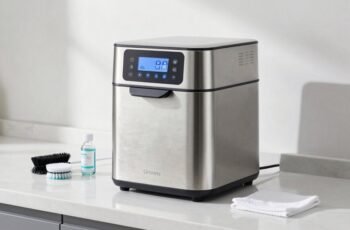
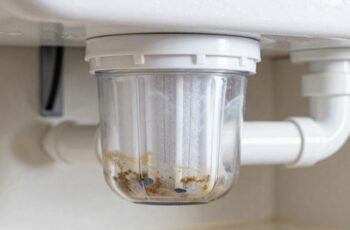
Did you know that neglecting regular maintenance can substantially compromise your water ionizer’s performance and lifespan? Proper care involves precise cleaning, timely part replacements, and monitoring water quality to prevent issues like scaling and corrosion. Without these measures, you risk inconsistent alkaline water production and potential device failure. Understanding the detailed steps involved is essential to guarantee ideal function—so, let’s explore the technical aspects that keep your system running efficiently.
Key Takeaways
- Regularly clean and inspect electrodes and filters to prevent mineral buildup and ensure optimal performance.
- Replace filters every 6-12 months and electrodes every 3-5 years based on usage and water quality.
- Use descaling solutions or vinegar to remove mineral deposits and maintain efficient ionization.
- Monitor water quality and install pre-filters to reduce impurities and extend device lifespan.
- Ensure proper water flow and pressure by cleaning hoses, filters, and flow restrictors periodically.
Why Regular Maintenance Matters for Your Water Ionizer
Regular maintenance is essential to guarantee your water ionizer functions efficiently and produces high-quality alkaline water. Proper upkeep ensures peak electrode performance by preventing mineral buildup and scaling, which can impair ionization efficiency. Consistent inspections help us detect early signs of corrosion or membrane degradation, allowing timely intervention. Maintaining the system’s internal components minimizes electrical resistance and prevents voltage fluctuations that could compromise water pH consistency. Regular calibration of the unit’s settings ensures accurate pH levels and antioxidant potential. Additionally, routine checks of water flow rates and pressure help us identify clogs or blockages that could reduce output quality. Overall, diligent maintenance preserves the lifespan of key components, sustains consistent water quality, and maximizes the ionizer’s performance over time.
How to Clean and Maintain Your Water Ionizer Filters
Maintaining your water ionizer’s filters is key to ensuring ideal performance and water quality. Regular cleaning involves removing the filter from the unit, then rinsing it under cold, running water to dislodge accumulated minerals and debris. For thorough cleaning, soak the filter in a solution of water and food-grade hydrogen peroxide or a specialized filter cleaner for 15-20 minutes, then scrub gently with a soft brush to eliminate biofilm or mineral buildup. It’s crucial to inspect the filter housing for clogs or sediment and clean it with a soft cloth. Reinstall the filter securely, ensuring proper sealing to prevent bypassing contaminants. Adhering to the manufacturer’s recommended cleaning frequency—typically every 6-12 months—maintains maximum filtration efficiency and extends the lifespan of your water ionizer.
Checking and Cleaning Electrodes for Optimal Performance
To guarantee ideal electrode performance, we recommend systematically inspecting the electrode surfaces for mineral buildup or corrosion using a magnifying tool. Proper cleaning involves gentle scrubbing with a non-abrasive pad and a specialized electrode cleaner, avoiding harsh chemicals that could damage the surfaces. Precise adherence to cleaning procedures and regular inspection intervals will maintain efficient ionization and prolong electrode lifespan.
Electrode Inspection Techniques
Electrode inspection is a critical step in ensuring the ideal performance of a water ionizer, as dirty or corroded electrodes can considerably impair efficiency. We recommend using a high-magnification magnifying glass or a digital microscope to examine the electrode surfaces closely. Look for signs of mineral buildup, corrosion, or pitting, especially around the edges and contact points. Check for uneven wear or discoloration, which may indicate compromised conductivity. Use a soft, lint-free cloth to gently wipe the electrodes if necessary, ensuring no abrasive materials scratch the surface. Record any irregularities or deposits. Regular inspection helps identify early signs of deterioration, enabling timely maintenance or cleaning before performance declines or damage occurs. Precise visual assessment is essential for maintaining ideal ionization efficiency.
Cleaning Procedure Tips
Regularly checking and cleaning the electrodes is essential for preserving ideal ionization performance in your water ionizer. To do this effectively, first disconnect the power and remove the electrode assembly, inspecting for mineral deposits or scaling. Use a soft, non-abrasive brush and a mixture of white vinegar and water (1:1 ratio) to gently scrub the electrode surfaces, focusing on areas with visible buildup. Avoid harsh chemicals that could damage the electrodes’ surface. Rinse thoroughly with distilled water to remove residual deposits. For persistent scale, a specialized descaling solution may be necessary, following manufacturer guidelines. Confirm complete dryness before reassembly to prevent corrosion. Regular maintenance like this sustains optimum ionization efficiency and prolongs electrode lifespan, ensuring consistent water quality.
When and How to Replace Parts in Your Water Ionizer
Understanding when and how to replace parts in your water ionizer is essential for maintaining peak performance and guaranteeing water quality. Regular assessment of key components extends device lifespan and preserves filtration efficacy.
- Electrodes: Replace every 3-5 years, or when performance declines, to prevent mineral buildup and maintain ionization efficiency.
- Filters: Change according to manufacturer recommendations, typically every 6-12 months, based on water usage and quality.
- Membranes: Replace every 2-3 years to prevent clogging and degradation of filtration quality.
- O-rings and Seals: Inspect quarterly and replace if signs of wear or leakage appear to prevent water bypass and contamination.
Adhering to these guidelines ensures prime operation and water purity, preventing unnecessary breakdowns.
Troubleshooting Common Water Quality Issues
When troubleshooting water quality issues, we focus on accurately identifying contaminants like bacteria, heavy metals, and chemical residues that can compromise water safety. Addressing mineral buildup, particularly calcium and magnesium deposits, is essential for maintaining ionizer efficiency and water purity. Precise detection and targeted cleaning protocols ensure ideal performance and water quality.
Identifying Water Contaminants
How can we accurately identify contaminants in our water supply to guarantee peak ionizer performance? Proper detection involves detailed water testing and analysis of specific parameters. We focus on key indicators such as pH levels, total dissolved solids (TDS), and presence of known impurities. Conducting laboratory assessments or using advanced water testing kits can reveal contaminant types and concentrations.
- Heavy metals: Lead, mercury, and arsenic levels detected via ICP-MS testing
- Chemical pollutants: Pesticides, herbicides, and industrial chemicals identified through gas chromatography
- Microbial presence: Bacteria and viruses confirmed through membrane filtration methods
- Mineral content: Calcium, magnesium, and iron levels measured by titration or spectrophotometry
Accurate identification helps determine necessary filtration and maintenance steps, ensuring *ideal* water quality.
Addressing Mineral Buildup
Mineral accumulation is a common issue that can considerably impair the efficiency and longevity of water ionizers. It occurs when dissolved minerals, such as calcium and magnesium, crystallize and deposit on internal components, especially electrodes and filters. This buildup reduces ionic transfer efficiency, leading to decreased pH levels and lower hydrogen output. To address this, we recommend performing regular descaling procedures using a specialized descaling solution or a mixture of citric acid and water. We advise turning off the unit, disconnecting it from power, and flushing the system thoroughly after descaling. Preventative maintenance includes installing a pre-filter to reduce mineral content and scheduling routine cleanings based on water hardness levels. Proper attention to mineral buildup ensures consistent performance and prolongs your ionizer’s operational lifespan.
Best Practices for Descaling and Preventing Mineral Buildup
Regular descaling is essential to maintaining peak performance and extending the lifespan of your water ionizer, especially in regions with hard water. Effective descaling involves using a dedicated descaling solution or a mixture of white vinegar and water, guaranteeing proper contact with all internal components. It’s critical to follow manufacturer instructions for concentration and contact time to avoid damage. To prevent mineral buildup, implement these best practices:
- Perform descaling every 1-3 months, depending on water hardness
- Use filtered or pre-treated water to reduce mineral load
- Regularly inspect and clean electrodes and flow paths
- Maintain consistent water pH levels to minimize scaling potential
Adhering to these practices ensures peak ionizer function, minimizes mineral deposits, and extends device durability.
Understanding the Importance of Water Source and Pre-Filtration
The quality of the water source directly impacts the efficiency and longevity of your water ionizer. Impurities such as sediment, chlorine, chloramine, heavy metals, and organic compounds can clog internal components, reduce electrolysis efficiency, and accelerate scale formation. Pre-filtration is essential to reduce particulate matter and chemical contaminants before water reaches the ionization chamber. A high-quality pre-filter, such as a carbon block or sediment filter, is designed to target specific impurities based on your water source’s profile. Consistent monitoring of water quality, including testing for total dissolved solids (TDS), helps determine the appropriate filtration system. Proper pre-filtration not only extends the lifespan of your ionizer but also guarantees ideal pH levels and consistent alkaline or acidic water production, maintaining device performance and water safety.
Maintaining Proper pH Balance and Water Output
To maintain ideal pH balance and consistent water output, we recommend regular pH testing using calibrated meters to detect deviations promptly. Adhering to a strict filter replacement schedule ensures the removal of contaminants that could affect ionization efficiency and water quality. Additionally, monitoring and adjusting water flow rates prevents fluctuations in pH levels and guarantees stable output volume.
Regular pH Testing
How can we guarantee that our water ionizer continues to produce ideal results? Regular pH testing is essential to verify consistent output and proper system function. Accurate testing involves using calibrated pH meters or test strips designed for water analysis to measure both the alkaline and acidic streams. We should record readings and compare them against manufacturer specifications to detect deviations.
- Perform pH tests at regular intervals, ideally weekly
- Use calibrated, high-accuracy testing devices
- Test both the alkaline and acidic outlets separately
- Document results for trend analysis and troubleshooting
Consistent testing helps identify early signs of electrode degradation or system imbalance, ensuring timely maintenance adjustments. This process maintains water quality, optimizes ionizer performance, and prolongs device lifespan.
Filter Replacement Schedule
Have you scheduled regular filter replacements to guarantee your water ionizer maintains ideal pH balance and consistent water output? Filter replacement intervals are critical for optimal performance, typically ranging from three to six months depending on usage and water quality. Over time, mineral buildup and sediment accumulation impair filtration efficiency, resulting in fluctuating pH levels and reduced water flow. It’s essential to monitor filter condition through visual inspection and performance metrics, such as flow rate and pH consistency. Using manufacturer-recommended replacement parts ensures compatibility and maintains filtration precision. Adhering to the recommended schedule prevents contamination, preserves ionization capabilities, and extends the lifespan of your unit. Regularly updating filters based on usage data and water quality tests guarantees sustained water quality and consistent output.
Proper Water Flowing
Are we guaranteeing that water flows through the ionizer at ideal rates to maintain consistent pH levels and water output? Proper water flow is vital for optimal ionization efficiency and stable pH balance. Insufficient flow can lead to incomplete ion exchange, resulting in inconsistent pH levels, while excessive flow may reduce contact time with the electrodes, decreasing mineral ionization. To maintain proper flow:
- Regularly inspect inlet and outlet filters for blockages or debris
- Verify that water pressure remains within manufacturer-specified ranges
- Clean flow restrictors or adjustable valves periodically
- Confirm hoses and fittings are free of kinks and leaks
Consistent, controlled water flow guarantees precise ionization, stabilizes pH output, and prolongs the device’s lifespan. Proper maintenance of flow parameters is essential for reliable, high-quality alkaline and acidic water production.
Scheduling Routine Maintenance for Longevity and Efficiency
To guarantee your water ionizer maintains peak performance over time, establishing a regular maintenance schedule is essential. This involves tracking filter replacement intervals, typically every 6 to 12 months, depending on usage and water quality. Regularly inspecting electrolysis plates for mineral buildup ensures maximum ionization efficiency; cleaning should occur quarterly or as needed, using manufacturer-recommended descaling agents. Routine sanitization of internal components prevents bacterial growth and cross-contamination. Documenting maintenance activities helps identify patterns that could indicate emerging issues. Additionally, verifying electrode connections and inspecting the power supply for stability prolongs device lifespan. By adhering to a detailed schedule, we ensure each component functions correctly, maximizing efficiency and extending the unit’s longevity. Consistent maintenance minimizes unexpected downtime and supports consistent water quality.
Tips for Safe and Effective Water Ionizer Care
Proper care of your water ionizer involves implementing safety protocols and precise procedures to prevent damage and guarantee peak performance. Consistently use manufacturer-recommended cleaning agents and avoid abrasive materials that can harm internal components. Regularly inspect electrical connections for corrosion or looseness, ensuring safety during operation. Adhere to proper water quality standards, using filtered or purified water to minimize mineral buildup. Additionally, always disconnect the unit before performing any maintenance tasks to prevent electrical shock.
- Use non-abrasive cleaning tools and approved solutions
- Regularly check and tighten electrical connections
- Monitor water quality and replace filters as needed
- Disconnect power before servicing or cleaning internal parts
Frequently Asked Questions
How Often Should I Schedule Professional Servicing for My Water Ionizer?
We recommend scheduling professional servicing every 6 to 12 months, depending on usage and water quality. Regular maintenance guarantees peak performance, prolongs device lifespan, and prevents buildup or malfunctions, keeping your water ionizer functioning efficiently and safely.
Can I Use Household Cleaning Products to Disinfect My Water Ionizer?
No, we don’t recommend household cleaning products because their chemicals can damage the ionizer’s components. Instead, we use specialized cleaning solutions designed for water ionizers, ensuring thorough disinfection without risking corrosion or malfunction.
What Are Signs That Indicate My Water Ionizer Needs Immediate Repair?
We notice leaks, persistent error codes, decreased alkaline or acidic output, strange odors, or abnormal electrical behavior, which all signal urgent repairs. Regularly inspecting and maintaining your water ionizer helps prevent these issues and guarantees peak performance.
How Do Different Water Sources Affect Maintenance Routines?
Different water sources act like variables in a complex equation, demanding tailored maintenance routines. We adjust filter replacements, mineral buildup checks, and cleaning schedules based on source mineral content and purity levels, ensuring the best performance and longevity.
Are There Eco-Friendly Cleaning Alternatives for Water Ionizer Maintenance?
Yes, eco-friendly cleaning alternatives include vinegar, baking soda, and citric acid, which effectively remove mineral buildup and biofilms without harsh chemicals. Regularly using these solutions helps maintain ideal ionizer performance while minimizing environmental impact.
Conclusion
In summary, regular maintenance is the backbone of our water ionizer’s peak performance, much like a finely tuned engine. By adhering to scheduled cleaning, prompt part replacements, and thorough inspections, we guarantee consistent water quality and device longevity. Staying diligent with these technical practices prevents issues before they arise, safeguarding your health and investment. Just as a precision instrument requires careful calibration, our commitment to maintenance ensures dependable, high-quality alkaline water for years to come.