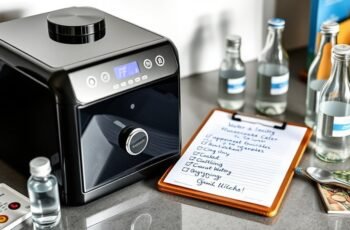
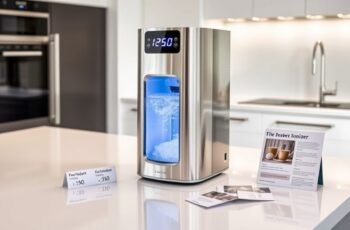
Understanding the energy consumption of water ionizers is essential for ensuring efficient operation and long-term sustainability. As we explore the factors that influence power needs and practical ways to reduce energy use, we’ll uncover strategies that balance performance with cost-effectiveness. Grasping these technical nuances can help optimize your device’s lifespan and energy efficiency, but it’s important to take into account all elements involved—there’s more to discover about making your water ionizer work smarter for you.
Key Takeaways
- Typical water ionizers consume 100-200 watts during operation, with standby modes using less than 10 watts.
- Larger or more efficient plates increase energy needs; advanced models often have power management features.
- Regular cleaning and proper maintenance help sustain energy efficiency and extend device lifespan.
- Choosing models with programmable settings and automatic shutoff can reduce overall energy consumption.
- Factors like water temperature and operational modes influence the device’s energy usage and performance.
How Much Energy Does a Water Ionizer Typically Use?
While water ionizers are generally designed to be energy-efficient, their power consumption can vary based on model and features. Typically, these devices use between 100 to 200 watts during operation, with some advanced models consuming slightly more due to additional functionalities like digital displays or multiple preset modes. The energy used mainly depends on the electrolysis process, which involves applying an electric current to split water molecules. Most models operate in short bursts during water ionization, reducing overall energy use. Standby modes or idle states consume minimal power, often less than 10 watts. Consequently, understanding the specific features and operational cycles of a water ionizer helps gauge its overall energy footprint, emphasizing the importance of selecting efficient models aligned with energy-saving goals.
Factors That Affect Your Water Ionizer’s Power Consumption
Several key factors directly influence the power consumption of your water ionizer, making it essential to understand how each component and setting impacts energy use. The electrolysis plate material and size are critical: larger or more efficient plates require more energy to produce higher ionization levels but can also operate more effectively. The filtration system’s complexity and flow rate affect energy demands, as higher flow rates demand increased power to maintain consistent ionization. Additionally, the device’s temperature settings influence energy use; warmer water typically needs more power for ionization. Finally, the operational mode—such as cleaning cycles or pre-set programs—can temporarily elevate power consumption. Recognizing how these factors interplay helps optimize performance while managing energy efficiency holistically.
Tips for Saving Energy and Extending Your Water Ionizer’s Lifespan
Implementing practical strategies can considerably reduce energy consumption and extend the lifespan of your water ionizer. Consistent maintenance, such as cleaning electrodes and replacing filters promptly, minimizes strain on components. Adjusting usage patterns—like avoiding continuous operation when unnecessary—reduces power draw. Proper placement away from heat sources and direct sunlight prevents overheating and corrosion.
| Strategy | Benefits | Implementation Tips |
|---|---|---|
| Regular Maintenance | Preserves ideal performance, extends lifespan | Schedule cleaning every 3-6 months |
| Usage Optimization | Saves energy, reduces wear | Use only when needed |
| Proper Placement | Prevents overheating, corrosion | Keep in cool, shaded areas |
How to Choose an Energy-Efficient Water Ionizer Model
Choosing an energy-efficient water ionizer model requires careful evaluation of its design features and technological specifications. We focus on power consumption ratings, guaranteeing they align with energy-saving standards without compromising performance. Look for models with advanced power management systems that maximize energy use during operation, reducing unnecessary energy waste. Consider the efficiency of the electrolysis plates, as higher-quality plates often require less energy to produce the desired alkaline or acidic water. Additionally, examine the control interface—models with programmable settings and automatic shutoff features help minimize energy consumption during idle periods. Holistically, selecting a model with modern, energy-conscious components ensures superior operation, reduces environmental impact, and lowers long-term energy costs, making it a sustainable choice for both your health and the planet.
Troubleshooting Common Energy-Related Issues With Water Ionizers
When your water ionizer isn’t operating efficiently, energy-related issues can often be traced to specific technical problems or misconfigurations. Common causes include mineral buildup on electrodes, which hampers conductivity and increases power consumption. Guaranteeing proper cleaning and descaling can restore best performance. Additionally, verifying the power supply connection and inspecting internal wiring for damage helps identify electrical faults. Incorrect voltage settings or faulty circuit boards can also lead to energy inefficiency. Calibration issues may cause the device to operate outside of ideal parameters, so recalibrating the system ensures energy is used effectively. Regular maintenance, including electrode replacement and system diagnostics, is essential for sustaining energy efficiency. Addressing these technical factors holistically keeps your water ionizer running smoothly and minimizes unnecessary energy expenditure.
Frequently Asked Questions
Does Water Temperature Affect the Energy Consumption of a Water Ionizer?
Yes, water temperature impacts energy consumption; colder water requires more energy to reach ideal ionization temperatures, while warmer water demands less. We recommend maintaining moderate water temperatures for efficient energy use and consistent ionization performance.
Are There Specific Brands Known for Lower Energy Use?
We find that certain brands, like Tyent and Kangen, are designed with energy efficiency in mind, utilizing advanced technology that minimizes power consumption while maximizing performance, which we believe benefits users seeking sustainable, cost-effective water ionization solutions.
How Often Should I Perform Maintenance to Optimize Energy Efficiency?
We recommend performing maintenance every 3 to 6 months to guarantee maximum energy efficiency. Regular cleaning, filter replacement, and checking electrical connections help maintain performance, prevent energy waste, and extend your water ionizer’s lifespan effectively.
Can Using Filtered or Pre-Treated Water Reduce Energy Consumption?
Using filtered or pre-treated water reduces mineral buildup, allowing our water ionizer to operate more efficiently and consume less energy. This holistic approach minimizes maintenance needs and enhances overall performance, ultimately conserving energy and extending device lifespan.
Is There a Recommended Daily Energy Usage Limit for Water Ionizers?
We recommend keeping daily energy use under 3 kWh, as studies show that exceeding this can reduce ionizer lifespan and efficiency. Monitoring your usage helps optimize performance while maintaining energy efficiency and prolonging device longevity.
Conclusion
By understanding energy use and applying practical tips, we can optimize our water ionizers for efficiency and longevity. Balancing power consumption with performance isn’t just about saving energy; it’s about ensuring consistent, high-quality hydration. While advanced models offer greater efficiency, regular maintenance and mindful operation remain essential. Together, these strategies create a harmonious approach—maximizing lifespan and minimizing costs—ultimately fostering a sustainable, reliable water ionization experience that benefits both our health and the environment.