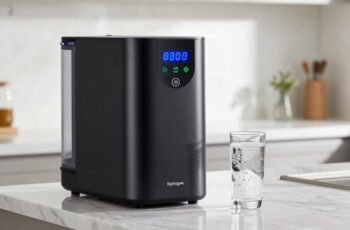
Did you know that nearly 85% of household water supplies contain detectable contaminants, yet the solutions to improve water quality vary considerably? As we examine water ionizers and reverse osmosis systems, it’s critical to understand their distinct mechanisms, benefits, and limitations. Choosing the right system isn’t simply about filtration; it involves evaluating health implications, maintenance demands, and environmental impacts—factors that can influence your decision in fundamental ways.
Key Takeaways
- Water ionizers increase alkalinity and add minerals through electrolysis, while RO systems produce highly purified, neutral water by filtering out contaminants.
- Ionizers offer antioxidant-rich, mineral-enhanced water but require regular electrode maintenance; RO systems prioritize purity but often strip beneficial minerals.
- Initial costs for ionizers are higher, but they have lower ongoing maintenance; RO systems are cheaper upfront but incur ongoing filter and membrane replacements.
- RO systems generate more wastewater and may involve chemical cleaning; ionizers produce less waste but need periodic filter changes.
- Choice depends on health goals: ionizers for mineral-rich, alkaline water; RO for maximum contaminant removal and safety.
What Are Water Ionizers and How Do They Work?
Have you ever wondered how water ionizers alter the properties of drinking water? These devices operate through electrolysis, separating water into alkaline and acidic components by passing an electric current across specially designed electrodes. The process involves ion exchange membranes that selectively allow ions to migrate, increasing the pH of the alkaline water. This ionization changes the water’s oxidation-reduction potential (ORP), making it more antioxidant-rich. The system typically includes a filter to remove impurities before electrolysis, ensuring purity. The resulting alkaline water has increased mineral content, such as calcium and magnesium, which influences its chemical composition and pH. Overall, water ionizers manipulate ionic charge and mineral concentration, fundamentally altering the water’s chemical profile for potential health and taste benefits.
The Benefits and Drawbacks of Water Ionizers
Water ionizers offer a range of potential health and taste benefits by altering the chemical properties of drinking water, but they also come with notable limitations that merit careful consideration. They can increase alkalinity, which some believe may neutralize acid in the body, and produce antioxidant-rich water with reduced oxidation-reduction potential (ORP). However, the actual health benefits remain scientifically debated, and the effects may vary among individuals. Additionally, ionizers often require regular maintenance and filter replacements, adding to operational costs. Their ability to produce consistent water quality depends on water source variability and device calibration. While they enhance taste by reducing chlorine and other impurities, they do not eliminate all contaminants. Overall, water ionizers present promising benefits, but their efficacy and practicality depend on specific use cases and user expectations.
How Reverse Osmosis Systems Purify Water Effectively
Reverse osmosis (RO) systems utilize a semi-permeable membrane to remove a broad spectrum of contaminants from water, operating through a process driven by pressure that forces water molecules to pass while blocking impurities. This membrane’s fine pore structure effectively filters out dissolved salts, heavy metals, bacteria, viruses, and organic compounds, ensuring high purity levels. The system’s multi-stage design often incorporates pre-filters, carbon filters, and post-filters to optimize efficiency and extend membrane lifespan. RO’s precise molecular separation relies on the differential permeability of the membrane, which allows clean water to permeate while contaminants are rejected and flushed away. This method provides consistent, reliable purification, making it a highly effective solution for producing mineral-free, contaminant-free drinking water in various settings.
Pros and Cons of Reverse Osmosis Water Filtration
Among the various water filtration methods, reverse osmosis (RO) stands out for its high effectiveness in removing a wide range of contaminants. Its core strength lies in eliminating dissolved solids, heavy metals, and pathogens, ensuring superior water purity. However, RO systems also have drawbacks. They tend to waste water, require regular maintenance, and strip beneficial minerals, potentially affecting taste and health.
| Pros | Cons |
|---|---|
| Effective contaminant removal | Water wastage during process |
| Improves water clarity | Mineral depletion |
| Suitable for heavily contaminated water | Higher initial and maintenance costs |
| Enhances taste and odor | Slower filtration rate |
| Reduces health risks | Requires electricity |
Comparing Water Quality: Ionized Water vs RO Purified Water
Both ionized water and RO purified water undergo rigorous filtration processes, but they differ considerably in their impact on water quality. Reverse osmosis effectively removes contaminants, including heavy metals, pathogens, and dissolved solids, resulting in extremely pure water with a neutral pH. However, this process also strips beneficial minerals, which can affect taste and mineral intake. Conversely, ionized water is produced by electrolysis, which enhances its pH and creates alkaline or acidic variants. The ionization process increases antioxidant potential and alters water’s chemical composition, providing higher levels of minerals like calcium and magnesium. While RO water is prized for purity, ionized water emphasizes mineral content and antioxidant properties. These distinctions influence not only taste but also potential health benefits and suitability for specific applications.
Cost, Maintenance, and Long-Term Value of Each System
When evaluating water purification options, the initial consideration often centers on cost, maintenance, and long-term value. Water ionizers typically involve higher upfront costs due to advanced electrolysis technology and durable components, but their maintenance demands are relatively low, mainly requiring electrode cleaning and filter replacements every 6 to 12 months. Reverse osmosis systems usually have lower initial purchase prices but incur ongoing expenses for filter and membrane replacements, which are essential for ideal performance. Over time, operating costs for RO units can accumulate, especially with frequent filter changes. Ionizers, though more expensive initially, may offer better long-term value by reducing ongoing maintenance costs. Conversely, RO systems tend to have lower purchase prices but higher cumulative maintenance expenses, affecting their overall cost-effectiveness.
Which Water System Is Better for Your Health and Lifestyle?
Choosing the right water system depends heavily on individual health priorities and lifestyle preferences. A water ionizer offers alkaline, antioxidant-rich water, which may support pH balance and reduce oxidative stress, beneficial for those seeking antioxidant properties or specific health benefits. Conversely, reverse osmosis provides highly purified water, removing contaminants, chemicals, and minerals, making it suitable for individuals prioritizing safety and purity. For active lifestyles or those with dietary restrictions, the ionizer’s mineralization process can provide essential minerals, while RO systems may require supplementation. Additionally, lifestyle factors like water consumption volume and maintenance capacity influence suitability; ionizers often require regular cleaning, whereas RO units involve regular filter replacements. Ultimately, selecting the appropriate system hinges on aligning health goals with practical usage considerations.
Key Factors to Consider When Choosing Between Ionizer and RO
Selecting the appropriate water treatment system requires evaluating several critical factors that align with your health priorities and practical needs. When comparing ionizers and RO systems, consider these key elements:
- Water Quality Goals: If you’re seeking alkaline, antioxidant-rich water, an ionizer is preferable. For removing contaminants like heavy metals and chemicals, RO systems excel.
- Maintenance and Operating Costs: Ionizers generally have lower ongoing costs but require filter replacements, while RO units demand regular membrane replacement and waste water management.
- Space and Installation: Ionizers are compact and easy to install under sinks, whereas RO systems require more space and plumbing modifications for installation.
Evaluating these factors helps determine the system that best fits your health objectives, lifestyle, and space constraints.
Final Tips for Making an Informed Water Purification Decision
Making an informed water purification decision involves a thorough assessment of your specific needs, budget, and environmental considerations. Begin by analyzing water quality reports to identify contaminants and determine which system effectively addresses them. Evaluate operational costs, including maintenance, filter replacements, and energy consumption, to avoid hidden expenses. Consider the environmental impact, such as water waste and chemical usage, to align with sustainability goals. Research the long-term durability and reliability of each system, consulting reviews and expert opinions. Finally, assess installation requirements and space constraints to guarantee compatibility with your home setup. Combining these technical factors enables a data-driven choice, balancing effectiveness with practicality, and ultimately ensuring safe, cost-efficient, and environmentally responsible water purification.
Frequently Asked Questions
Can Water Ionizers Remove Heavy Metals and Pesticides?
Research shows that water ionizers mainly target alkalinity and pH levels, not heavy metals or pesticides, which are better removed by reverse osmosis systems; therefore, ionizers aren’t sufficient for thorough contaminant removal.
Does Reverse Osmosis Affect Beneficial Minerals in Water?
Reverse osmosis considerably reduces beneficial minerals like calcium and magnesium in water, potentially impacting its nutritional value. We recommend mineral supplementation if relying solely on RO systems to maintain essential mineral intake and water quality.
How Much Energy Do Water Ionizers Typically Consume?
They say “a penny saved is a penny earned,” and water ionizers typically consume about 50-150 watts during operation. We find their energy use moderate, making them efficient for continuous use while providing alkaline, ionized water.
Are There Any Health Risks Associated With Drinking Demineralized Water?
Drinking demineralized water may pose health risks, including mineral deficiencies and altered electrolyte balance, potentially impacting cardiovascular and bone health; we recommend consulting health professionals before integrating such water into your routine.
Which System Is More Environmentally Sustainable Long-Term?
This is an environmental showdown that could change your perspective forever! Reverse osmosis systems typically consume more water and energy, making water ionizers a more sustainable choice long-term due to their efficiency and lower resource use.
Conclusion
Ultimately, choosing between a water ionizer and an RO system boils down to your priorities—alkaline bliss or pure, contaminant-free water. If you crave minerals and antioxidants, the ionizer’s your friend; if you prefer absolute purity and simplicity, RO’s the way. Either way, remember that your water’s journey isn’t just about filtering but about aligning with your health goals and lifestyle. So, pick wisely—your taste buds and kidneys will thank you.