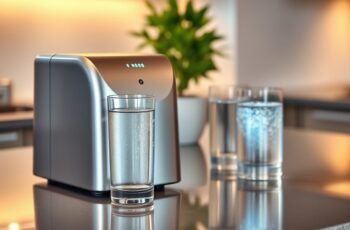
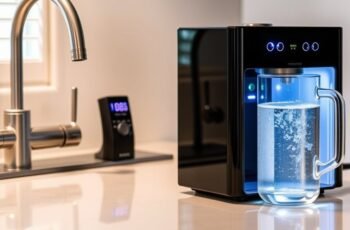
The prevailing assumption that all water ionizers deliver identical health benefits warrants closer examination, as the technology’s effectiveness heavily depends on specific design and operational factors. We aim to clarify these nuances by analyzing key features, performance metrics, and safety considerations that influence a device’s true value. Understanding these elements is essential for making informed decisions, yet many overlook vital differences—an oversight that could impact long-term satisfaction and health outcomes.
Key Takeaways
- Evaluate electrode quality, number of plates, and materials to determine ionization efficiency and device durability.
- Compare pH adjustment ranges, processing speed, and flow rate for suitable water treatment needs.
- Assess filtration system quality and maintenance requirements for water safety and ease of use.
- Consider power wattage and programming features for performance, customization, and energy efficiency.
- Review safety guidelines, installation, and manufacturer support to ensure proper operation and longevity.
What Is a Water Ionizer and How Does It Work?
A water ionizer is a device designed to alter the pH level of drinking water through electrolysis, effectively producing alkaline and acidic streams. It operates by passing water over multiple metal plates—typically titanium coated with platinum—within an electrochemical chamber. When an electric current is applied, mineral ions such as calcium, magnesium, and potassium are separated based on charge. The positive electrode yields acidic water, rich in H+ ions, while the negative electrode generates alkaline water, abundant in OH- ions. This separation results in water with distinct pH levels, which can be adjusted through electrode configuration and voltage settings. The process’s precision allows for controlled alkalinity, making water suitable for various health and cleaning applications.
Key Features to Consider When Choosing a Water Ionizer
When selecting a water ionizer, understanding the key features that influence performance and usability is essential. Critical factors include electrode quality, which directly impacts ionization efficiency and durability; the number of platinum-coated titanium plates, affecting pH range and oxidation stability; and the machine’s flow rate, determining how quickly water is processed without compromising ionization quality. Additionally, programming options like adjustable pH levels and automatic cleaning cycles enhance user control and maintenance. The quality of the filtration system also plays a crucial role by removing contaminants that could impair ionization or compromise water safety. Finally, build quality, including durable materials and reliable wiring, ensures longevity and consistent performance. These features collectively determine the ionizer’s effectiveness, ease of use, and long-term value.
Comparing Top Water Ionizer Models: Pros and Cons
When comparing top water ionizer models, we focus on performance and efficiency to determine their ability to produce consistent, high-quality alkaline water. Price and value are also critical, as they influence long-term affordability and overall system reliability. Analyzing these points helps identify models that optimize functionality while balancing cost considerations.
Performance and Efficiency
How do different water ionizer models measure up regarding performance and efficiency? Variations hinge on electrode quality, power output, and processing speed. Higher-end models typically feature advanced platinum-coated titanium electrodes, ensuring consistent ionization and longevity. Power output, measured in watts, directly influences hydrogen production and water alkalinity, with more powerful units delivering higher pH levels efficiently. Processing speed impacts the volume of water treated per cycle, affecting overall efficiency.
Key factors include:
- Electrode material and surface area, influencing ionization consistency.
- Power wattage, determining hydrogen and hydroxide generation.
- Water flow rate, affecting treatment time and output capacity.
Analyzing these metrics reveals a clear performance spectrum, guiding ideal model selection based on specific needs.
Price and Value
Evaluating the price and value of top water ionizer models requires a careful analysis of their features relative to cost. We focus on the balance between advanced filtration, electrolysis capabilities, and build quality versus their initial purchase price. Higher-end models often offer superior durability, enhanced pH ranges, and more customizable settings, justifying their premium. Conversely, budget options may provide adequate performance but lack longevity and advanced features, lowering overall value. It’s essential to contemplate long-term costs, including maintenance and filter replacements, which can substantially impact total value. Our analysis emphasizes that the most cost-effective models deliver a combination of reliable performance, durability, and feature set aligned with the user’s needs, ensuring that the investment provides both immediate benefits and sustained functionality.
How to Evaluate Your Water Quality and Needs
Evaluating your water quality and needs is a critical first step in selecting an appropriate water ionizer, as it guarantees the device addresses specific contaminants and mineral compositions present in your supply. To do this effectively, consider these key factors:
Assess your water quality first to choose the right ionizer for your specific contaminants and mineral needs.
- Contaminant Levels: Analyze for heavy metals, chlorine, chloramine, and other pollutants that may influence filtration and ionization requirements.
- Mineral Content: Measure total dissolved solids (TDS) and mineral profiles, which impact water pH and ionizer performance.
- Water Source: Determine whether your water is municipal, well, or filtered, influencing the type of pre-treatment needed for ideal operation.
A thorough assessment ensures the chosen ionizer effectively enhances water quality tailored to your specific conditions.
Installing and Maintaining Your Water Ionizer for Best Results
Proper installation and ongoing maintenance are crucial to guarantee your water ionizer functions at peak performance and delivers consistent water quality. Correct placement involves ensuring proximity to a reliable water source, stable electrical connections, and appropriate drainage. Secure mounting minimizes vibration and potential damage, while verifying plumbing connections prevents leaks and ensures ideal flow. Regular maintenance includes replacing filters as recommended, inspecting electrodes for mineral buildup, and cleaning the unit with manufacturer-approved solutions. These steps prevent scaling, prolong device lifespan, and maintain ionization efficiency. Consistent calibration and monitoring of pH levels are also indispensable to sustain water quality standards. Precise adherence to installation protocols and maintenance schedules enhances performance, reduces troubleshooting, and ensures the ionizer consistently meets desired health and filtration objectives.
Frequently Asked Questions About Water Ionizers
Understanding how water ionizers operate and their safety profile is essential for informed decision-making. We will analyze the electrochemical processes involved and evaluate safety considerations based on current research. This overview aims to clarify common concerns and provide a solid technical foundation for users.
How Do Water Ionizers Work
Water ionizers operate by applying an electrical current to water, a process known as electrolysis, which separates the water into distinct alkaline and acidic streams. During electrolysis, the device’s electrodes facilitate ion migration, altering water’s pH and mineral content.
Key mechanisms include:
- Electrode Reactions: The positive electrode (anode) produces acidic water, while the negative electrode (cathode) generates alkaline water.
- Ion Separation: Minerals like calcium, magnesium, and sodium are redistributed, raising or lowering pH levels accordingly.
- Flow Control: Valves and filters regulate water flow through different electrolysis chambers, ensuring consistent separation and mineralization.
This process results in water with varying pH levels, tailored for specific health and cleaning applications.
Are Water Ionizers Safe
Although water ionizers are generally considered safe when used as directed, concerns about their safety often arise from misconceptions or lack of understanding of the technology. These devices employ electrolysis to alter water’s pH, and when properly maintained, they do not introduce harmful substances. Most safety issues stem from improper installation, inadequate cleaning, or misuse, which can lead to mineral buildup or bacterial growth. It is crucial to follow manufacturer guidelines for maintenance and use. Scientific studies confirm that drinking ionized water within recommended pH ranges poses no health risks. However, excessive consumption of highly alkaline water may cause gastrointestinal discomfort. Overall, with appropriate operation, water ionizers are a safe technology for enhancing water quality and hydration.
Frequently Asked Questions
Are Water Ionizers Safe for Children and Pregnant Women?
Water ionizers are generally safe for children and pregnant women when used properly, but consulting healthcare professionals is essential. We recommend monitoring pH levels and avoiding excessive alkalinity to guarantee safety, especially during pregnancy and early childhood.
How Long Does a Typical Water Ionizer Last?
A typical water ionizer acts like a reliable engine, lasting around 5-10 years with proper maintenance. Regular filter replacements and careful usage guarantee it continues to perform efficiently, much like fine-tuning a precision instrument.
Can a Water Ionizer Remove All Types of Contaminants?
Water ionizers primarily target specific contaminants like heavy metals and chlorine. However, they don’t remove all types of impurities, such as bacteria or viruses, requiring additional filtration systems for thorough water purification.
What Is the Energy Consumption of a Water Ionizer?
Water ionizers typically consume between 100 to 200 watts during operation, depending on the model. We analyze energy efficiency by considering power consumption relative to ionization capacity, ensuring ideal performance with minimal energy usage for sustainable, cost-effective operation.
Are There Any Health Risks Associated With Alkaline Water?
An ounce of prevention is worth a pound of cure. While alkaline water is generally safe, excessive consumption might disrupt stomach acidity or electrolyte balance, so we recommend moderation and consulting healthcare professionals, especially for those with health conditions.
Conclusion
In steering the complex landscape of water ionizers, we see that choosing the right model is not just about features but about understanding how each aligns with our water quality and health goals. Like a well-tuned instrument, the right device enhances hydration and safety. By analyzing key specifications and maintaining our systems properly, we guarantee ideal performance. Ultimately, informed choices empower us to harness technology for better health—because in water, precision is everything.