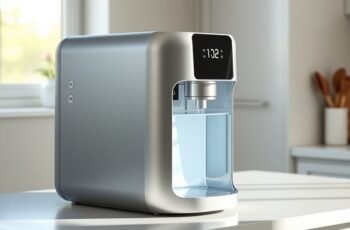
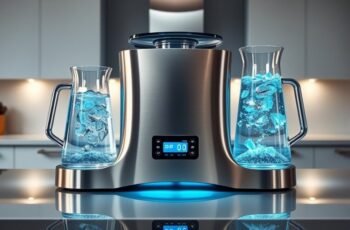
Imagine your water ionizer as a high-performance engine, where energy consumption directly impacts your operating costs. Just like fuel efficiency varies with driving habits, utility costs fluctuate based on device settings, water quality, and maintenance practices. Understanding these factors is essential, yet many overlook their influence on long-term expenses. As we examine the intricacies of power use, filter replacements, and efficiency features, you’ll see why managing these costs requires careful attention—something worth exploring further.
Key Takeaways
- Water ionizers primarily consume energy during electrolysis, influenced by water conductivity, electrode design, and device settings.
- Higher pH levels and increased electrolysis intensity lead to greater power usage and utility costs.
- Regular filter replacements and electrode maintenance add to long-term expenses and impact overall efficiency.
- Energy-efficient models with advanced circuitry and smart features can reduce electricity consumption.
- Water consumption rates and maintenance frequency significantly affect the total operational costs of water ionizers.
How Do Water Ionizers Consume Energy?
Water ionizers primarily consume energy through their electrolysis process, which involves passing an electric current through water to separate it into alkaline and acidic streams. This process relies on electrochemical reactions at the electrode surfaces, requiring a consistent power supply to maintain ionization levels. The energy consumption depends on factors such as water conductivity, electrode material, and the voltage applied. Higher water conductivity reduces resistance, decreasing energy use, while more advanced electrode designs optimize efficiency. The device’s control systems also influence power draw by regulating voltage and current during operation. Overall, energy consumption remains relatively stable during ionization, but variations in water quality and device settings can affect the total power needed. Understanding these factors helps in evaluating the utility costs associated with water ionizer operation.
What Maintenance Costs Are Typical for Water Ionizers?
Maintenance costs for water ionizers primarily involve filter replacements and electrode cleaning, which impact ongoing expenses. Filters typically need changing every 6 to 12 months, depending on usage and water quality, while electrode cleaning may be required monthly to maintain efficiency. Understanding these requirements helps predict the long-term operational costs and optimize system performance.
Filter Replacement Frequency
Since filter replacement is crucial for maintaining the efficacy of water ionizers, understanding the recommended frequency is essential for estimating ongoing costs. Typically, filters are replaced every 6 to 12 months, depending on water quality and usage volume. Factors influencing replacement include mineral content and filter capacity. Below is a summary:
| Filter Type | Replacement Interval | Cost Range |
|---|---|---|
| Carbon Block | 6-12 months | $20-$50 |
| Mineral Filters | 6-12 months | $25-$60 |
| Pre-Filters | 6-12 months | $15-$40 |
| Alkaline Filters | 6-12 months | $30-$70 |
| Ultra-Filters | 6-12 months | $40-$80 |
Regular replacement ensures consistent performance and prevents contamination, directly impacting maintenance costs.
Electrode Cleaning Needs
Electrode cleaning is a critical component of water ionizer upkeep that directly influences performance and longevity. Over time, mineral deposits and sediment accumulation impair electrode efficiency, reducing ionization quality. Regular cleaning involves using specialized descaling agents or citric acid solutions, which dissolve mineral buildup without damaging components. The frequency of cleaning depends on water hardness; harder water requires more frequent maintenance. Typical costs include cleaning supplies, which range from $10 to $30 per treatment, and potential professional servicing if internal cleaning is needed. Neglecting electrode maintenance can lead to decreased pH levels, lower antioxidant potential, and increased energy consumption. Consequently, proactive cleaning not only sustains ideal performance but also extends the lifespan of the ionizer, making it a cost-effective maintenance practice.
How Much Does Filter Replacement Cost Over Time?
Over the lifespan of a water ionizer, filter replacement costs accumulate considerably, impacting the overall investment. Typically, filters need replacement every 6 to 12 months, depending on water quality and usage volume. The cost per filter ranges from $30 to $100, with higher-end models featuring multi-stage filtration that increases expenses. Over three years, this can amount to roughly $90 to $300 in replacement costs alone. Material and filtration complexity influence pricing, with activated carbon and specialty filters costing more. Additionally, frequent replacements may lead to increased labor or maintenance expenses if professional services are involved. Consequently, understanding long-term filter costs is essential for accurate total cost assessment, ensuring that budget allocations for maintenance are aligned with expected expenses over the device’s operational lifespan.
What Factors Affect Utility Costs in Water Ionizers?
Utility costs in water ionizers are primarily influenced by several operational factors that directly impact energy consumption and water usage. The efficiency of the electrolysis process determines how much power is needed to produce ionized water, with advanced models often optimized to reduce energy draw. Additionally, the frequency and duration of use considerably affect overall costs; longer or more frequent operation increases energy and water consumption. The water flow rate also plays a role, as higher flow rates require more power for ionization. Conversely, inefficient insulation or aging components can cause energy losses, raising utility costs. Understanding these factors helps users optimize operation to minimize expenses, emphasizing the importance of selecting energy-efficient models and monitoring usage patterns for cost-effective water ionization.
How Do Water Ionizer Settings Impact Power Usage?
Have you ever considered how the settings on your water ionizer directly influence its power consumption? The ionizer’s voltage, current, and electrode activity determine energy use during operation. Higher pH levels typically require increased electrolysis time and more active electrodes, which consume additional power. Adjustments to the electrolysis intensity or duration directly impact energy demands, with more aggressive settings demanding greater electrical input. Conversely, lower settings for milder ionization reduce power consumption by limiting electrode activity and electrolysis duration. Additionally, some models optimize energy efficiency through pulse modulation or smart sensor-based adjustments, minimizing unnecessary power draw. Understanding these settings allows users to balance desired water quality with energy efficiency, emphasizing that operational choices considerably influence overall utility costs.
Are There Affordable Water Ionizer Options?
Are budget considerations influencing your choice of water ionizer? Affordable options do exist within the market, often featuring simplified designs but still providing essential ionization functions. To identify reliable budget models, consider factors such as build quality, ionization capacity, and filter lifespan. Lower-cost units typically incorporate digital controls and fewer advanced features, which can reduce upfront costs but may impact long-term operational expenses. It’s vital to analyze the trade-offs between initial investment and ongoing maintenance costs to guarantee the selected model offers true value.
Some affordable water ionizer options include:
- Compact countertop units
- Basic models with fewer plates
- Units with simplified control panels
- Economical filter replacement plans
- Brands with positive consumer reviews and warranty coverage
How Can You Reduce Your Water Ionizer Utility Bills?
To lower utility bills, we can focus on optimizing water usage and ensuring equipment is properly maintained to prevent inefficiencies. Selecting energy-efficient models further reduces power consumption and operational costs. Implementing these strategies enables more cost-effective operation of water ionizers over time.
Optimize Water Usage
Optimizing water usage is essential for minimizing the operational costs of a water ionizer. By efficiently managing water input, we can reduce waste and lower utility bills. To achieve this, consider the following strategies:
- Adjust flow rates to match your actual consumption needs, avoiding unnecessary water use.
- Install flow restrictors or aerators to control water volume without compromising performance.
- Use pre-filtration systems to prevent mineral buildup, reducing the frequency of flushing cycles.
- Monitor water pressure levels, maintaining ideal flow to prevent overuse.
- Schedule regular system flushes during off-peak hours to maximize water efficiency.
Implementing these measures ensures precise control over water consumption, directly impacting utility costs and promoting sustainable operation.
Maintain Equipment Properly
Regular maintenance of your water ionizer directly influences its efficiency and operational costs. Consistent cleaning prevents mineral buildup and electrode corrosion, which can impair ionization performance and increase energy consumption. Regularly inspecting and replacing filters guarantees ideal water flow and reduces strain on internal components. Proper descaling using manufacturer-approved solutions minimizes scaling deposits that diminish efficiency. Accurate calibration of pH levels and electrode adjustments maintains steady water quality, preventing unnecessary energy expenditure. Additionally, timely replacement of worn parts reduces the risk of malfunction, which can lead to higher utility costs through increased power or water usage. Implementing these maintenance protocols systematically ensures the ionizer operates at peak efficiency, ultimately lowering utility bills and prolonging equipment lifespan.
Select Energy-Efficient Models
Have you considered that selecting energy-efficient water ionizer models can markedly lower your utility bills? These models optimize power consumption by employing advanced circuitry and improved heating elements. To maximize savings, look for units with features like low standby power, automatic shut-off, and inverter technology.
- High-efficiency power supplies that reduce energy waste
- Sensors that adjust operation based on usage patterns
- Insulation enhancements minimizing heat loss
- Programmable settings for optimized operation cycles
- Energy Star certification indicating superior efficiency
What Are the Hidden Costs of Water Ionizer Ownership?
While the initial purchase price of a water ionizer often garners most attention, there are several hidden costs that can considerably impact the overall expense of ownership. Maintenance requirements, such as regular filter replacements, can accumulate over time, adding ongoing costs that are often overlooked. Additionally, energy consumption, especially in models lacking energy-efficient features, can increase utility bills unexpectedly. Potential repair costs due to component wear or failure also pose financial considerations, particularly if warranties are limited or expired. Water quality issues may necessitate pre-treatment systems, incurring further investment. Lastly, disposal or recycling costs for obsolete units can add to the total lifecycle expense. Recognizing these hidden costs is essential for accurate financial planning and evaluating the true affordability of water ionizer ownership.
How Do Water Ionizer Utility Costs Compare to Alternatives?
When comparing utility costs, water ionizers often appear more energy-intensive than traditional tap or filtered water systems, but the actual expenses depend heavily on usage patterns and model efficiency. Energy consumption varies based on features like electrolysis and filtration, influencing monthly costs. To evaluate alternatives, consider these factors:
- Electricity usage per cycle, typically higher for ionizers
- Filtration system energy requirements, generally lower
- Maintenance and replacement costs impacting overall expenses
- Water consumption rates, affecting utility bills
- Initial installation costs, which influence long-term cost-effectiveness
While ionizers require more energy, their benefits in water quality may justify higher utility costs for some users. Comparing these factors enables a more precise assessment of total operational expenses versus traditional systems.
Frequently Asked Questions
Do Water Ionizers Have Any Standby Power Consumption?
Yes, water ionizers do consume standby power, typically ranging from 1 to 10 watts, to maintain internal components’ readiness. We analyze this ongoing energy use to optimize efficiency and reduce overall operational costs for users.
How Does Water Temperature Affect Energy Use?
Water temperature directly impacts energy use; heating water increases consumption, especially at higher temperatures. Lowering the temperature reduces energy demand, making systems more efficient. Consequently, optimizing water temperature balances performance and energy savings effectively.
Are There Energy-Efficient Water Ionizer Models Available?
We find that energy-efficient water ionizer models, like the IonTech EcoPlus, reduce power consumption by utilizing advanced power management. For example, its auto-shutoff feature minimizes energy use during standby, optimizing efficiency without sacrificing performance.
Can Adjusting Settings Lower Overall Utility Costs?
Yes, adjusting settings like pH levels and output flow can optimize energy use, reducing utility costs. We analyze efficiency data to fine-tune these parameters, ensuring minimal power consumption while maintaining water quality standards.
Do Installation Requirements Influence Energy Consumption?
Bite the bullet: installation requirements considerably influence energy consumption. Proper, professional setup guarantees ideal operation, reducing unnecessary power draw. We recommend adhering strictly to manufacturer guidelines to prevent inefficiencies and maintain energy efficiency over the device’s lifespan.
Conclusion
Ultimately, managing water ionizer utility costs is like steering a ship through fluctuating currents; awareness of energy use, maintenance, and settings guides us toward smoother sailing. By understanding these factors, we can optimize performance and minimize expenses, much like adjusting sails for efficiency. While costs may seem like turbulent waters, informed choices serve as our compass, helping us navigate toward sustainable, cost-effective water ionization—turning potential financial storms into predictable, manageable waters.