We recognize how important it is to have access to clean, great-tasting water every day. That’s why we’ve looked into four top Japanese filtration systems that combine tradition and innovation. From natural charcoal sticks to advanced ionization machines, each offers unique benefits for purity and sustainability. But which system best suits your needs? Keep exploring to discover the features that could transform your hydration routine.
Key Takeaways
- Japanese charcoal-based systems like Binchotan efficiently remove odors, chlorine, and water hardness for better taste and purity.
- Enagic K8 offers instant, ionized water with mineral enrichment and advanced filtration technology.
- Reusable charcoal sticks can be rejuvenated by boiling, providing cost-effective and eco-friendly water purification.
- Systems vary from manual sticks suitable for bottles to advanced electric filters for home use.
- These Japanese systems prioritize natural, chemical-free filtration, sustainability, and customized hydration solutions.
Binchotan Charcoal Water Purifying Sticks (2 Pack)


If you’re looking for an eco-friendly and effective way to improve your drinking water, the Binchotan Charcoal Water Purifying Sticks are an excellent choice. Made from high-grade Japanese oak charcoal from Kishu, these sticks absorb odors, reduce water hardness, and enhance taste. Each stick filters up to 2 liters of water over 3-4 hours, providing fresh, clean water naturally. To maintain their effectiveness, simply boil them for 10 minutes every two weeks and let them dry. Compact and easy to use, these sticks are a sustainable solution for better-tasting water at home.
Best For: individuals seeking an eco-friendly, natural solution to improve water taste, reduce odors, and soften water at home.
Pros:
- Made from high-quality Japanese oak charcoal, ensuring effectiveness and durability
- Naturally improves water taste and reduces hardness without chemicals
- Reusable with simple maintenance, making it eco-friendly and cost-effective
Cons:
- Requires a 3-4 hour filtering time, which may not be suitable for immediate use
- Needs regular boiling and drying every two weeks to maintain performance
- Not suitable for microbiologically unsafe or unknown water sources
Black + Blum Charcoal Water Filter Sticks (4 Pack)

The Black + Blum Charcoal Water Filter Sticks are ideal for anyone seeking natural, long-lasting water purification. Inspired by traditional Japanese practices, these BINCHOTAN charcoal sticks remove chlorine, soften water, and absorb tastes and odors, all from natural wood. Pre-cleaned and ready to use, they fit easily into most bottles, jugs, and dispensers. Each stick lasts around six months—when effectiveness wanes, simply boil for 10 minutes to rejuvenate. These sticks not only improve water’s taste but also release beneficial minerals like calcium and magnesium, supporting healthier hydration. Their versatile size ensures compatibility with various containers, making them a practical, eco-friendly choice.
Best For: environmentally conscious individuals seeking natural, long-lasting water purification solutions for everyday use.
Pros:
- Made from natural wood inspired by traditional Japanese charcoal filtration methods
- Lasts approximately six months per stick with easy rejuvenation by boiling
- Compatible with various containers like bottles, jugs, and dispensers
Cons:
- Requires boiling for rejuvenation, which may be inconvenient for some users
- Size variation may not fit all bottle types perfectly
- Effectiveness may diminish over time, necessitating replacement after six months
Enagic Leveluk K8 Water Filter Machine

The Enagic Leveluk K8 stands out with its advanced platinum-coated plates that deliver efficient water ionization. This machine promotes energy, improves hydration, and supports detoxification with ease. It eliminates the need for bottled water, potentially saving you over $10,000 in the long run. Conveniently, it produces clean, ionized water instantly from your tap, with no extra steps required. Featuring a user-friendly touch screen interface and Japanese engineering, the K8 offers reliable performance backed by a solid warranty. It’s a smart, cost-effective choice for those seeking pure, healthy water at home.
Best For: those seeking a reliable, cost-effective water ionizer that promotes better hydration, detoxification, and energy at home.
Pros:
- Advanced platinum-coated plates for efficient water ionization
- Instant, convenient access to clean, healthy water from tap
- User-friendly touch screen interface with Japanese engineering quality
Cons:
- Higher upfront cost compared to basic water filters
- Requires electrical power and regular maintenance
- May be overkill for those only needing standard filtered water
IPPINKA Binchotan Charcoal Water Purifying Sticks (2 Pack)

For those seeking a natural, chemical-free way to improve water quality, the IPPINKA Binchotan Charcoal Sticks offer an effective solution. Made from high-grade Binchotan charcoal from Japan’s Kishu region, these sticks absorb odors, reduce water hardness, and enhance taste. Each stick filters about 3 liters of water over 3-4 hours, making your tap water cleaner and fresher. To keep them effective, simply boil the sticks for 10 minutes every two weeks to reactivate. With two sticks included, you can maintain consistent filtration at home, ensuring your water remains pure, tasty, and free from unwanted impurities.
Best For: those seeking a natural, chemical-free method to improve water quality and taste at home.
Pros:
- Made from high-quality, authentic Binchotan charcoal sourced from Japan’s Kishu region
- Effective at absorbing odors, reducing water hardness, and enhancing flavor over a 3-4 hour filtration period
- Reusable with simple boiling reactivation every two weeks to maintain performance
Cons:
- Requires a 3-4 hour filtering time, which may not be suitable for immediate water needs
- Needs regular boiling for reactivation, which involves time and effort
- Not recommended for use with microbiologically unsafe or unknown-quality water
Factors to Consider When Choosing Japanese Water Filtration Systems
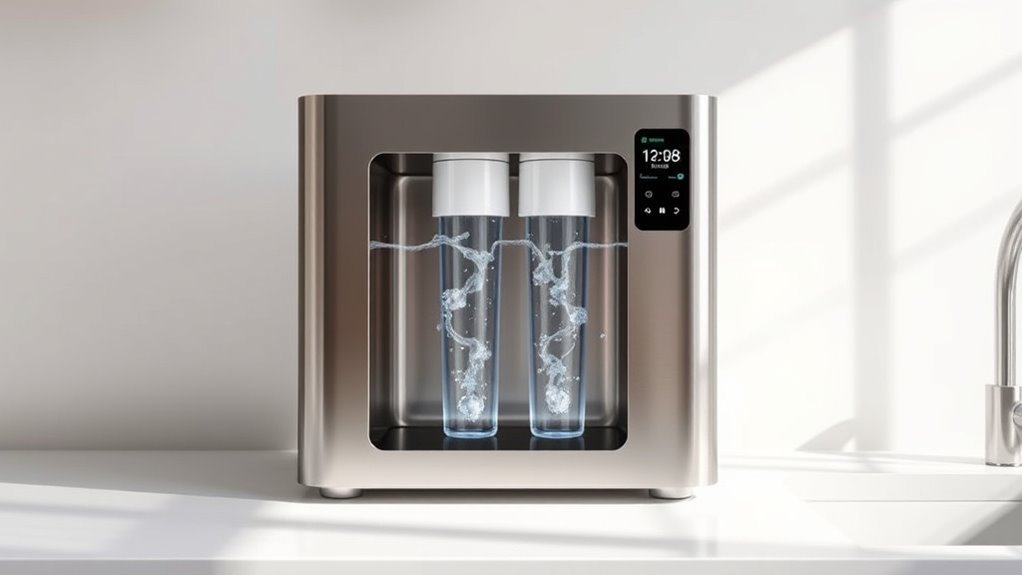
When choosing a Japanese water filtration system, we consider the filtration method, water quality needs, and how often the filters need replacing. It’s also important to guarantee the system works well with your containers and is easy to maintain. By focusing on these factors, we can find a solution that fits your lifestyle and water preferences.
Filtration Method Types
Japanese water filtration systems come in a variety of methods, each with unique advantages depending on your needs. Many utilize charcoal-based techniques, such as Binchotan, which naturally absorb impurities and odors, improving water taste and clarity. Others incorporate ionization technology to add beneficial minerals while removing contaminants, enhancing both flavor and health benefits. Traditional methods include activated charcoal sticks, which can be rejuvenated by boiling to maintain their effectiveness. Some systems blend these approaches, offering simple charcoal filtration or advanced electronic ionizers for higher purification levels. The effectiveness of these methods is often measured by their ability to reduce chlorine, water hardness, and unwanted substances, ensuring water is not only pure but also better tasting. Selecting the right method depends on your specific water quality needs and preferences.
Water Quality Needs
Understanding your water quality is essential before choosing a filtration system, as it reveals the specific contaminants, odors, or minerals that need removal or enhancement. We should evaluate whether our water has chlorine, heavy metals, microbiological contaminants, or unpleasant odors, which influence the type of filtration needed. If our goal is basic taste improvement or more advanced purification for health concerns, this helps narrow down options. We also need to take into account if mineral enrichment is desirable, as some systems add beneficial minerals while filtering out harmful substances. Additionally, evaluating our daily water consumption ensures we select a system capable of meeting our hydration and usage needs efficiently. Knowing these factors helps us choose a Japanese water filtration system tailored to our precise water quality and lifestyle requirements.
Filter Longevity & Reuse
Choosing a filtration system involves considering how long the filters last and whether they can be reused. Japanese water filters typically last between 3 to 6 months, depending on water quality and usage. Proper reactivation by boiling charcoal sticks every two weeks can restore their filtration power, extending their lifespan. The amount of water filtered also affects longevity; some sticks are designed to filter up to 3 liters over several hours. Reusable Japanese charcoal sticks can be rejuvenated multiple times, reducing the need for frequent replacements and saving money. Regularly monitoring performance and reactivating the filters guarantees consistent water quality. Overall, selecting a system with durable, reusable filters offers both convenience and sustainability, making it a smart choice for ongoing pure water.
Compatibility With Containers
When selecting a water filtration system, guaranteeing it fits seamlessly with your existing containers is key to maintaining convenience and efficiency. Check that the size and shape of the system match your bottles, jugs, or carafes to avoid awkward spills or leaks. Make sure charcoal sticks or filters can slide comfortably into your container without causing messes. It’s also important to verify that the device can be securely sealed or attached, preventing water from bypassing the filter. Additionally, consider the material of your containers—glass, metal, or plastic—to guarantee there’s no negative reaction with the filtration system. Finally, confirm that the system is designed for use with your specific container type to guarantee ease of use and filtering performance.
Ease of Maintenance
Regular maintenance is essential for guaranteeing your Japanese water filtration system performs effectively over time. We look for systems that require minimal reactivation or replacement, so you can enjoy consistent, pure water without hassle. Simpler cleaning methods, like boiling or rinsing, make upkeep straightforward and less time-consuming. Durable components that are easy to disassemble help prevent damage and simplify cleaning routines. It’s also helpful if the filtration media, such as charcoal sticks, can be reactivated easily or need only infrequent replacement. Clear, simple instructions are a must, reducing the risk of improper maintenance and extending the system’s lifespan. Ultimately, choosing a system designed for easy upkeep saves you time, effort, and guarantees ideal performance over the long run.
Material & Source Quality
The material quality and sourcing of Japanese water filtration systems directly influence their effectiveness and longevity. High-grade materials like Binchotan charcoal are prized for their dense, porous structure, which enhances filtration and improves taste. Sourcing from reputable regions like Kishu ensures the charcoal is made from premium Japanese oak, maintaining purity and high standards. The processing methods, such as ultrasonic cleaning and aging, further boost the charcoal’s ability to absorb contaminants. Additionally, sustainably harvested wood guarantees eco-friendly sourcing and preserves material integrity. The quality of the raw materials determines not only filtration efficiency but also the system’s durability and reactivation capacity, directly impacting its lifespan and consistent performance. Choosing systems with reputable sourcing and superior materials guarantees reliable, long-lasting filtration that delivers truly pure water.
Cost & Budgeting
Choosing the right Japanese water filtration system requires careful consideration of both upfront costs and ongoing expenses. Basic charcoal sticks are affordable, around $10-$20 per pack, but need frequent reactivation or replacement, increasing long-term costs. Advanced machines, like premium ionizers, can cost over $3,000 upfront but may save money over time by reducing bottled water purchases. When budgeting, consider maintenance costs, filter replacements, and energy consumption, which all impact total expenses. Cheaper options might seem attractive initially but can add up due to frequent reactivation. Conversely, investing in a more advanced system might have higher initial costs but offer better savings and convenience later. Overall, balancing initial investment with ongoing costs guarantees you choose a system that fits your budget and long-term needs.
Environmental Impact
Japanese water filtration systems often prioritize eco-friendly materials and practices, making environmental impact a key consideration. Many utilize natural, sustainably sourced materials like Binchotan charcoal from Japanese oak forests, which has a low environmental footprint. These systems emphasize reusability and regeneration, reducing waste compared to single-use bottles and disposable filters. The production process for Japanese charcoal filters involves eco-friendly methods such as carbonization without harmful chemicals, minimizing pollution. Reusable filtration sticks made from Binchotan can last several months with proper maintenance, decreasing the need for frequent replacements. Additionally, choosing systems that promote water conservation and energy efficiency aligns with Japan’s sustainability goals, helping to lower the overall ecological footprint. These factors make Japanese filtration systems a responsible choice for environmentally conscious consumers.
Frequently Asked Questions
How Often Should I Replace the Charcoal Sticks for Optimal Filtration?
We suggest replacing charcoal sticks every 3 to 6 months for ideal filtration. Regularly check for signs of wear or diminished water taste, and follow your specific system’s guidelines to guarantee your water remains pure and invigorating.
Are Japanese Water Filtration Systems Suitable for All Water Types?
Imagine a crystal-clear mountain stream—our Japanese filtration systems suit all water types, transforming even the toughest tap or well water into pure, invigorating liquid. We trust them to deliver clean, great-tasting water every time.
Do These Systems Remove Beneficial Minerals From Water?
Our Japanese water filtration systems mainly remove contaminants and impurities, but they’re designed to retain beneficial minerals like calcium and magnesium, ensuring you get pure, healthy water without sacrificing essential nutrients.
What Is the Maintenance Required for the Enagic Leveluk K8?
Oh, the Enagic Leveluk K8 practically maintains itself! We just replace the filters every few months, clean the unit periodically, and guarantee the water flow stays smooth—simple, really. No rocket science here, just basic upkeep.
Can These Filters Improve the Taste of Tap Water Significantly?
Yes, these filters can considerably improve tap water taste by removing impurities and odors. We’ve seen noticeable differences in flavor and clarity, making our drinking water much more enjoyable and invigorating with consistent use.
Conclusion
In the end, finding the right Japanese water filtration system comes down to our needs and values. Whether it’s the natural purification of Binchotan charcoal or the advanced ionization of the Enagic K8, each option offers unique benefits. Remember, “Good things come to those who wait,” and investing in quality water solutions ensures we enjoy pure, revitalizing hydration every day. Let’s choose wisely and drink to our health!