Maintaining a water ionizer is essential for ensuring consistent performance and extending its lifespan. Regular cleaning, descaling, and component inspection are critical tasks that prevent mineral buildup, corrosion, and leaks. Proper adherence to manufacturer guidelines and understanding the timing for filter replacements can considerably impact efficiency. As we explore these maintenance practices, you’ll discover specific procedures and proactive measures that help keep your system running at its best, ultimately saving you time and costly repairs over the long term.
Key Takeaways
- Regularly clean electrodes with non-abrasive brushes and neutral pH solutions to maintain ionization efficiency.
- Replace filters every 6-12 months based on water quality and usage to ensure optimal filtration.
- Descale the system every 1-3 months using vinegar or specialized descaling agents to prevent mineral buildup.
- Inspect all fittings, seals, and connections regularly for leaks and tighten as needed to prevent water damage.
- Conduct routine internal inspections and test water quality to identify issues early and prolong device lifespan.
How Often Should You Clean Your Water Ionizer?
Typically, we recommend cleaning your water ionizer at least once every one to three months, depending on usage and water quality. Regular cleaning prevents mineral buildup, which can impair electrolysis efficiency and alter pH levels. The frequency depends on water hardness; harder water accelerates scale formation, necessitating more frequent cleaning. We suggest monitoring the unit’s performance and inspecting internal components for mineral deposits periodically. For maximum operation, cleaning should be performed whenever you notice a decline in alkaline water quality, reduced flow rate, or unusual tastes. Consistent maintenance ensures accurate pH output, prolongs the lifespan of electrodes, and maintains water purity. Tailoring cleaning intervals to your specific water conditions helps sustain the device’s efficiency and prevents costly repairs caused by mineral accumulation.
Step-by-Step Guide to Routine Cleaning and Maintenance
To guarantee peak performance, we focus on systematic routines including regular filter replacement, thorough cleaning of electrodes to prevent mineral buildup, and meticulous inspection for leaks. Each step requires precise procedures to maintain water quality and device longevity. Implementing these practices consistently helps sustain the ionizer’s efficiency and prevents costly repairs.
Regular Filter Replacement
Have you ever wondered how often you should replace the filter in your water ionizer to guarantee peak performance? Typically, filters need replacement every 6 to 12 months, depending on water quality and usage. Regular filter replacement is essential to prevent mineral buildup, bacterial growth, and flow rate reduction, which can impair ionization efficiency. To determine the precise interval, monitor filter pressure gauges or flow indicators if available, and record usage. When replacing, verify the system is turned off and depressurized to avoid damage. Carefully remove the old filter, checking for sediment or clogging, and install the new filter securely, aligning it properly with the casing’s fittings. Proper timing and technique in filter replacement maintain ideal water purification and ionization performance.
Cleaning Electrodes Properly
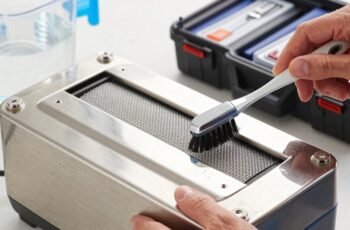
Regularly cleaning the electrodes in your water ionizer is essential for maintaining peak performance and guaranteeing high-quality alkaline water. Over time, mineral deposits and biofilm buildup can impair ionization efficiency. To clean effectively, disconnect power, remove the electrode assembly, and use a non-abrasive, neutral pH cleaning solution. Gently scrub with a soft brush to avoid damage, focusing on areas with visible deposits. Proper cleaning preserves electrode surface area, optimizing ion exchange. The table below illustrates key factors influencing cleaning outcomes:
| Cleaning Method | Effectiveness | Precautions |
|---|---|---|
| Mechanical brushing | Removes deposits | Avoid scratching electrodes |
| Acidic cleaning | Dissolves mineral buildup | Use safe, neutral solutions |
| Ultrasonic cleaning | Deep cleaning | Prevent damage to seals |
| Regular inspection | Ensures cleanliness | Schedule routine maintenance |
| Use of soft brushes | Prevents surface damage | Always follow manufacturer guidelines |
Checking for Leaks
After completing electrode cleaning, inspecting your water ionizer for leaks is a vital step in routine maintenance. Leaks can cause water damage, reduce efficiency, and indicate component failure. To check for leaks, systematically examine all connection points, including inlet and outlet hoses, fittings, and seals. Look for visible water accumulation, drips, or dampness around these areas. Confirm all fittings are tightly secured without over-tightening, which can damage threads. Use a paper towel or dry cloth to detect slow leaks or moisture. If leaks are present, identify whether they originate from loose fittings, damaged seals, or cracked components, then replace or tighten accordingly. Regular inspection prevents more extensive repairs and preserves peak operation of your water ionizer.
How to Check and Replace Your Water Filter Properly
To guarantee peak performance and water quality, it’s essential to routinely inspect and replace your water filter according to the manufacturer’s specifications. First, turn off the unit and depressurize the system. Remove the filter housing using a filter wrench, noting the orientation for proper reinstallation. Examine the filter’s condition—look for clogging, discoloration, or sediment buildup. Replacement should occur when the filter has reached its capacity or after a set period, typically 6-12 months. Use the following table as a guide:
| Filter Type | Inspection Frequency | Replacement Duration |
|---|---|---|
| Sediment Filter | Monthly | 6-12 months |
| Carbon Block | Monthly | 6-12 months |
| Reverse Osmosis | Quarterly | 12 months |
| Mineral Filter | Quarterly | 12 months |
| Special Filters | As specified | As specified |
Proper handling guarantees effective filtration and prevents damage to the unit.
Identifying and Troubleshooting Common Water Ionizer Issues
When your water ionizer isn’t performing as expected, pinpointing the root cause requires a systematic approach to identify common issues and their solutions. First, check for electrical problems, such as faulty power cords or tripped circuit breakers. Next, verify water flow and pressure; blockages or low pressure can impair ionization. finally, assess electrode cleanliness, as mineral buildup can diminish performance. Common issues include:
Troubleshoot water ionizer issues by checking electrical, water flow, and electrode cleanliness for optimal performance.
- Inconsistent pH levels or weak alkaline output
- Unusual noises or vibrations during operation
- Error messages or system shutdowns
Best Practices for Preventing Mineral Build-Up and Leaks
Mineral buildup and leaks are common issues that can considerably impair the performance and longevity of a water ionizer, but they can often be prevented through diligent maintenance practices. To minimize mineral accumulation, we recommend regularly descaling your unit using manufacturer-approved descaling solutions or diluted vinegar, focusing on the internal mineral pathways. Ensuring proper filtration of incoming water reduces mineral load and prevents clogging. Regularly inspecting and tightening all fittings and hoses helps prevent leaks caused by loose connections or degraded seals. Additionally, maintaining a clean exterior and avoiding overfilling the reservoir reduces stress on components and prevents water damage. Implementing these practices consistently preserves the integrity of internal components, reduces the risk of mineral-related blockages, and extends the overall lifespan of your water ionizer.
Maintaining Your Water Ionizer’s Performance Over Time
To guarantee consistent performance, we focus on timely filter replacements to prevent clogging and maintain ideal ionization. Regular descaling and cleaning remove mineral deposits that can impair system efficiency, while ongoing water quality monitoring helps identify issues before they affect operation. Together, these practices sustain the ionizer’s functionality and extend its lifespan.
Regular Filter Replacement
How often should we replace the filter in a water ionizer to guarantee peak performance? Typically, filters should be changed every 6 to 12 months, depending on usage and water quality. Regular replacement guarantees optimal filtration, prevents mineral buildup, and maintains ionizer efficiency.
Key considerations include:
- Water quality: Higher mineral content shortens filter lifespan.
- Usage frequency: More frequent use accelerates filter wear.
- Filter type: Specific models may have different replacement intervals.
Monitoring the filter’s condition is essential; a decline in water flow rate or taste indicates it’s time for replacement. Proper timing preserves filtration efficacy, extends device longevity, and ensures the consistent production of high-quality alkaline water.
Descaling and Cleaning
Have you considered how mineral deposits and buildup can impair your water ionizer’s performance over time? Hard water minerals like calcium and magnesium can precipitate onto electrode plates, reducing ionization efficiency and flow rate. Regular descaling is essential to remove these deposits, typically using a descaling solution or vinegar to dissolve mineral buildup without damaging internal components. Proper cleaning involves flushing the system with a specialized cleaning agent, ensuring all channels and electrodes are free of residue. It’s crucial to follow manufacturer instructions carefully, avoiding abrasive tools or harsh chemicals that could damage sensitive parts. Consistent descaling and cleaning maintain ideal water flow, guarantee high-quality ionization, and extend the lifespan of your device. Routine maintenance prevents costly repairs and guarantees consistent water quality.
Monitoring Water Quality
Regularly monitoring the water quality entering your ionizer is critical for maintaining peak performance and ensuring the longevity of the device. Consistent testing helps identify changes in mineral content, pH balance, and contaminant levels that could impair ionization efficiency. We recommend using a TDS meter to measure total dissolved solids, ensuring levels stay within manufacturer specifications. Conduct periodic water tests for heavy metals, chlorine, and other impurities to prevent scaling and corrosion. Additionally, tracking water parameters over time allows for proactive maintenance, such as filter replacement or system calibration. By maintaining rigorous water quality checks, you optimize ionizer output and extend its lifespan. Regular monitoring acts as an early warning system, preventing costly repairs and ensuring consistently high-quality alkaline and acidic water production.
Tips for Extending Your Water Ionizer’s Lifespan
Maintaining peak performance from your water ionizer requires proactive measures to prevent buildup and component degradation. Regularly cleaning the electrodes with a non-abrasive brush and a designated descaling solution minimizes mineral accumulation that impairs ionization efficiency. Ensuring the filters are replaced according to manufacturer recommendations prevents clogging and maintains ideal water flow. Periodic inspection of the internal components for corrosion or wear allows early intervention before failures occur. Using filtered or softened water reduces mineral deposits, extending component lifespan. Additionally, powering down the unit during extended periods of non-use prevents unnecessary electrical strain. Implementing these practices consistently preserves the integrity of the membranes and electrodes, ultimately extending the service life of your water ionizer and ensuring reliable, high-quality operation over time.
Frequently Asked Questions
Can I Use Vinegar to Clean My Water Ionizer?
Yes, you can use vinegar to clean your water ionizer, but dilute it to avoid damaging internal components. We recommend a mixture of 1 part vinegar to 4 parts water, followed by thorough rinsing to guarantee no residue remains.
How Often Should I Replace the Internal Electrodes?
Like a well-oiled machine, we recommend replacing internal electrodes every 3 to 5 years, depending on usage and water quality, to maintain ideal ionization efficiency and prevent corrosion, ensuring your water stays pure and healthy.
Is It Safe to Run My Water Ionizer Without Filters?
Running your water ionizer without filters isn’t safe; it exposes internal components to sediment, contaminants, and scale buildup, risking damage and reducing effectiveness. Always guarantee filters are properly installed and maintained to protect your device and health.
What Signs Indicate My Water Ionizer Needs Professional Repair?
When signs like inconsistent water flow, unusual noises, persistent error messages, or decreased ionization efficiency appear, we understand it’s time for professional repair—like a well-tuned engine, our water ionizer needs expert attention to keep performing at its best.
Do Different Water Types Require Different Maintenance Routines?
Different water types demand tailored maintenance routines; for instance, hard or mineral-rich water accelerates mineral buildup, requiring more frequent descaling and filter changes, while softer water needs less intensive upkeep to optimize ionizer performance and longevity.
Conclusion
In the end, neglecting maintenance might seem like saving time, but it’s more like ignoring a ticking time bomb. Regular cleaning, filter replacements, and inspections are our best defenses against costly repairs and performance decline. Think of it as fine-tuning a complex machine—skimping on upkeep only guarantees breakdowns. So, while it may seem tedious, proper maintenance guarantees your water ionizer operates at peak efficiency, transforming ordinary water into an extraordinary asset rather than a ticking hazard.